
 Save
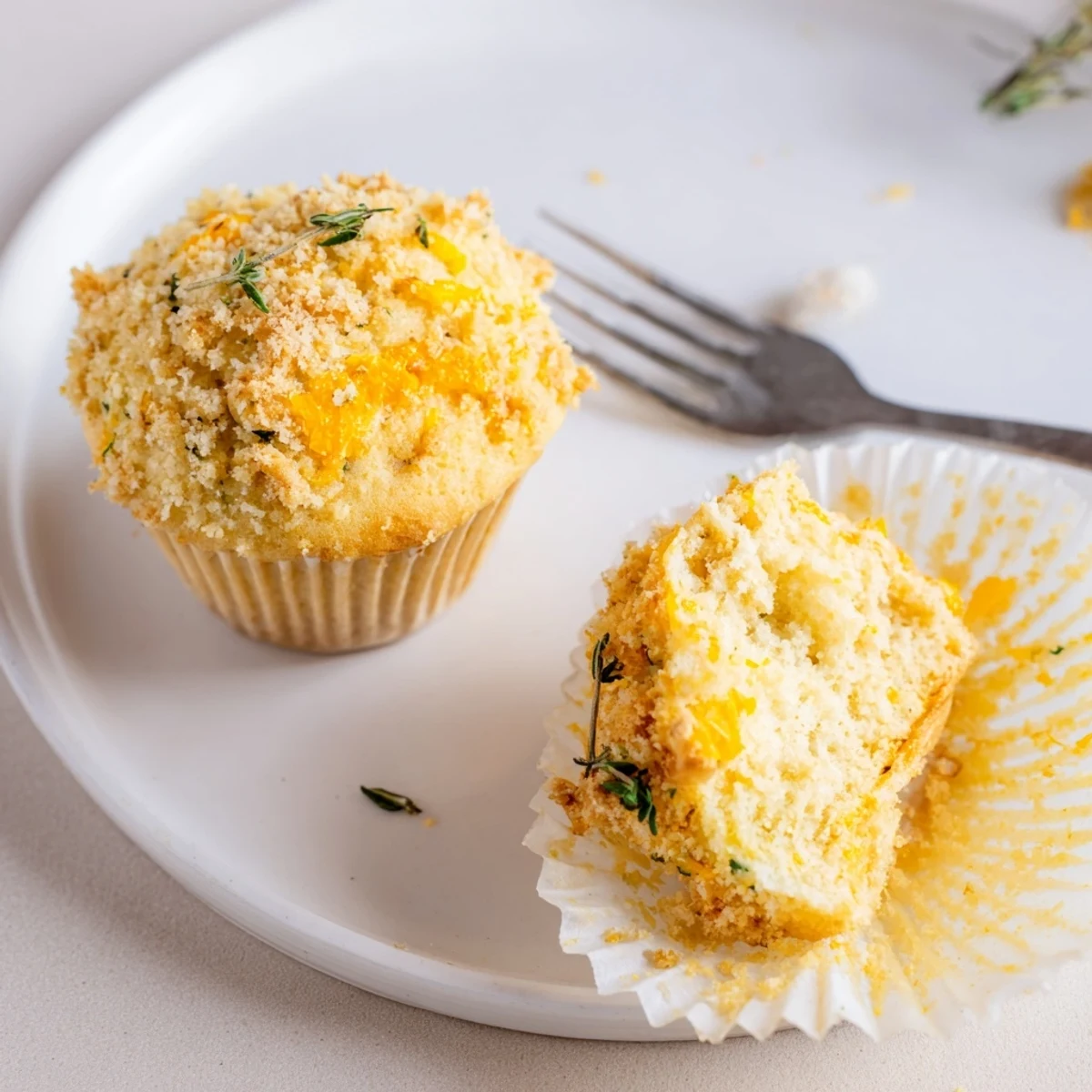
Save These lemon orange honey muffins bring together bright citrus flavors with natural honey sweetness, creating a tender, moist crumb that's perfect for starting your day. The fresh orange and lemon zest infuse every bite with vibrant notes.
What sets these apart is the thyme crumble topping—a buttery, herbaceous crunch that contrasts beautifully with the soft interior. Fresh thyme leaves paired with sugar and cold butter create golden, fragrant crumbs that caramelize slightly during baking.
Using yogurt keeps the texture incredibly tender while honey adds depth beyond plain sugar. They come together in under 45 minutes with simple pantry ingredients and basic mixing techniques—no stand mixer required.
My kitchen window was open on a sunday afternoon when the smell of thyme drifting from my neighbor's garden gave me the wildest idea: what if I folded that herbal fragrance straight into something sweet and citrusy?
I brought a batch to a friend's rooftop potluck last spring and watched three people reach for seconds before the cheese board even got unwrapped.
Ingredients
- All-purpose flour (2 cups / 250 g for muffins, plus 1/3 cup / 40 g for crumble): Spoon and level rather than scooping directly from the bag to avoid dense muffins.
- Baking powder (2 tsp) and baking soda (1/2 tsp): Check that both are fresh; expired leavening is the silent culprit behind flat muffins.
- Salt (1/2 tsp for batter, pinch for crumble): Salt amplifies citrus and balances honey beautifully.
- Honey (1/2 cup / 120 ml): A mild, floral honey works best here; bold varieties like buckwheat can overpower the citrus.
- Vegetable oil (1/3 cup / 80 ml): Oil keeps these muffins tender for days, longer than butter would.
- 2 large eggs: Bring them to room temperature so the batter emulsifies smoothly.
- Plain yogurt (1/2 cup / 120 ml): Greek yogurt makes the crumb richer if you have it on hand.
- Freshly squeezed orange juice (1/4 cup / 60 ml) and lemon juice (2 tbsp): Fresh juice matters; bottled versions taste flat and dull the brightness.
- Zest of 1 orange and zest of 1 lemon: Rub the zest into the sugar or honey with your fingers to release the essential oils.
- Vanilla extract (1 tsp): A quiet backbone that ties every flavor together.
- Granulated sugar (3 tbsp for crumble): Just enough to give the crumble a delicate crunch.
- Unsalted butter, cold and cubed (2 tbsp for crumble): Cold butter creates those beautiful, irregular crumbs that crisp in the oven.
- Fresh thyme leaves, 2 tsp (or 1 tsp dried): Strip the leaves gently off the stems; woody bits are no fun to bite into.
Instructions
- Set the stage:
- Preheat your oven to 350°F (175°C) and line a 12-cup muffin pan with paper liners or give each cup a light grease.
- Whisk the dry team:
- In a medium bowl, whisk together the flour, baking powder, baking soda, and salt until evenly distributed.
- Blend the wet ingredients:
- In a large bowl, whisk the honey, oil, eggs, yogurt, orange juice, lemon juice, both zests, and vanilla until the mixture looks silky and smooth.
- Marry the two:
- Gradually fold the dry ingredients into the wet using a spatula, stopping the moment you no longer see streaks of flour; overmixing is the enemy of a tender crumb.
- Fill the cups:
- Divide the batter evenly among the muffin cups, filling each about three-quarters full.
- Build the thyme crumble:
- In a small bowl, combine the flour, sugar, thyme leaves, and a pinch of salt, then press the cold butter in with your fingertips until the mixture resembles coarse sand with some larger pebbles.
- Crown the muffins:
- Sprinkle the crumble generously over each muffin, pressing down very lightly so it adheres to the batter beneath.
- Bake until golden:
- Bake for 20 to 22 minutes, until the tops are golden and a toothpick slipped into the center of a muffin comes out clean.
- Cool with patience:
- Let the muffins rest in the pan for 5 minutes, then transfer them to a wire rack to cool completely before storing.
 Save
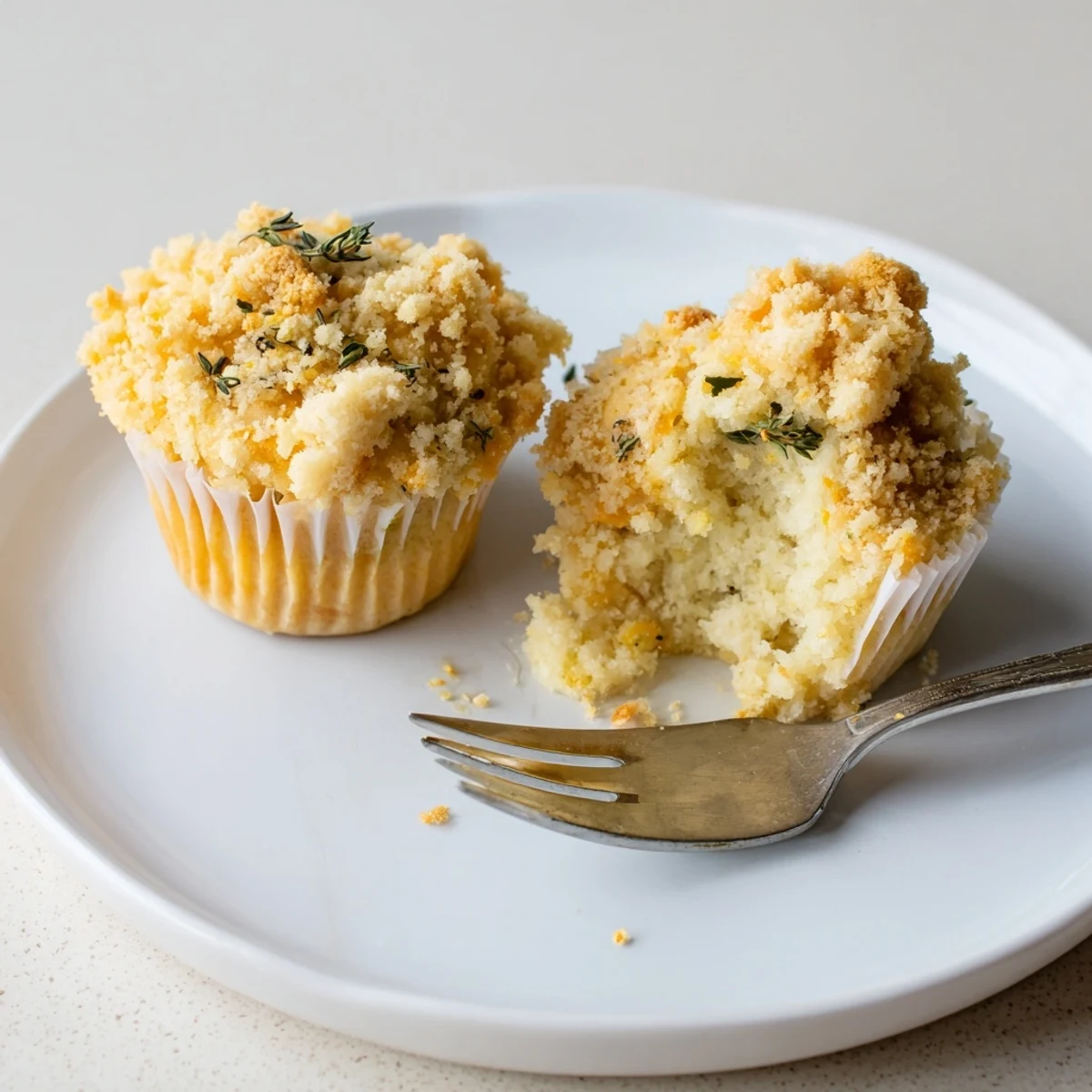
Save There is something quietly wonderful about pulling a tray of golden, herbal muffins from the oven and realizing you created something that tastes like sunshine and a garden at the same time.
Making These Your Own
A splash of orange blossom water stirred into the wet ingredients adds a perfumed depth that feels almost mediterranean without much effort at all.
Storage That Keeps Them Soft
Keep leftover muffins in an airtight container at room temperature for up to three days; the crumble softens slightly but the flavor actually deepens overnight.
Quick Answers Before You Start
These muffins are forgiving and adaptable, so a few common questions tend to come up the first time around.
- Swap the vegetable oil for melted coconut oil if you want a subtle tropical undertone.
- Dried thyme works in a pinch, but use half the amount since it is more concentrated than fresh.
- Always zest your citrus before juicing; trying to zest a squeezed lemon is a frustrating little battle you do not need.
 Save
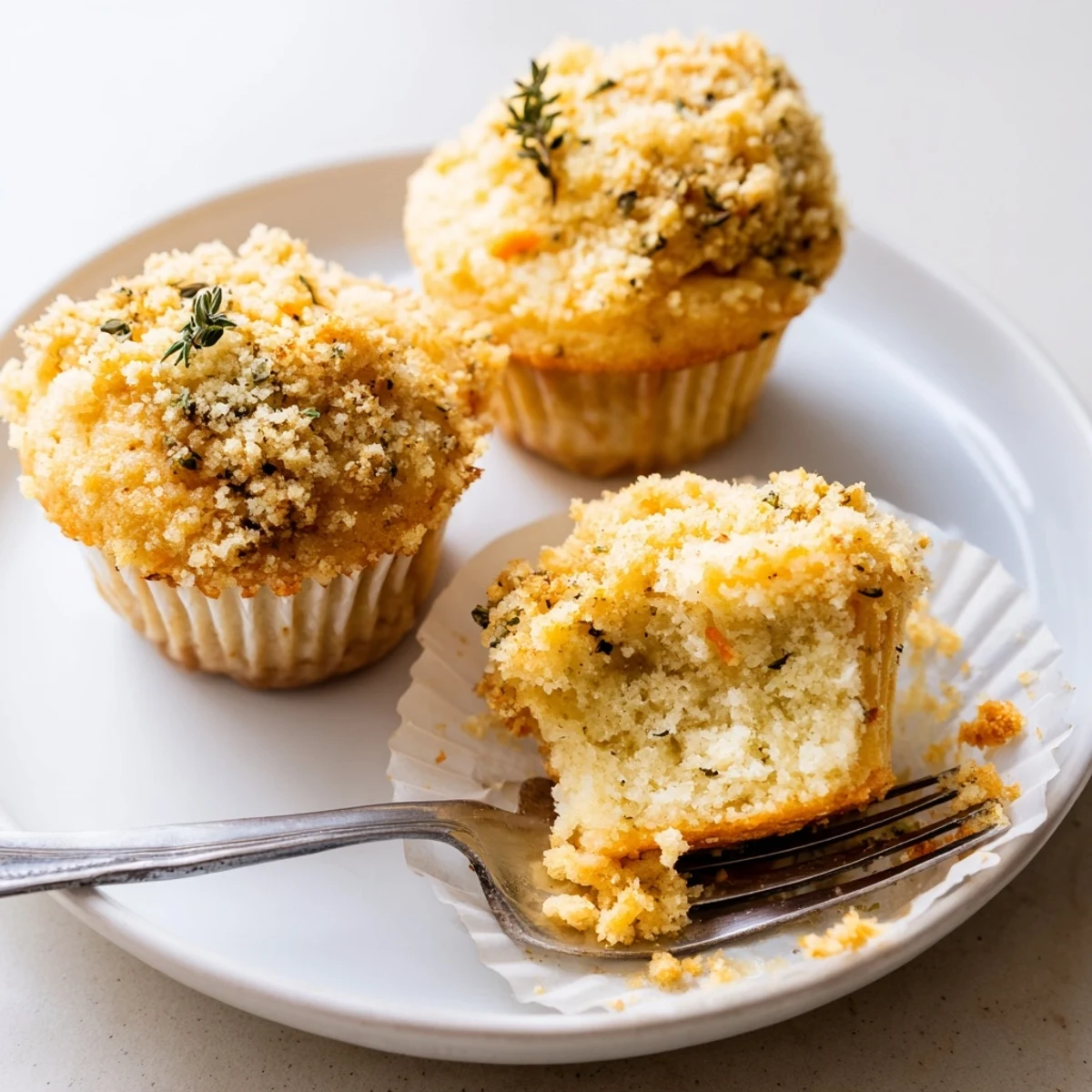
Save These lemon orange honey muffins carry a little bit of warmth and surprise in every bite, and I hope they find a place in your kitchen as often as they have in mine.
Recipe Questions & Answers
- → Can I use dried thyme instead of fresh for the crumble?
-
Yes, substitute 1 teaspoon of dried thyme for the 2 teaspoons of fresh thyme leaves. Dried herbs are more concentrated, so you need less. Crumble the dried leaves between your fingers before adding to release their essential oils.
- → How should I store these muffins?
-
Store cooled muffins in an airtight container at room temperature for up to 3 days. For longer storage, freeze them individually wrapped in plastic wrap for up to 3 months. Thaw at room temperature or warm briefly in the oven.
- → Can I make the batter ahead of time?
-
It's best to bake the batter immediately after mixing since the leavening agents activate once combined. However, you can prepare the thyme crumble topping a day ahead and refrigerate it in a sealed container until ready to use.
- → Why shouldn't I overmix the muffin batter?
-
Overmixing develops the gluten in the flour, resulting in tough, dense muffins with tunnel-like holes instead of a tender, even crumb. Fold the dry ingredients into the wet just until no dry streaks remain—some small lumps are perfectly fine.
- → What can I substitute for plain yogurt?
-
Greek yogurt works well and creates a richer, slightly denser texture. You can also use buttermilk or sour cream thinned with a splash of milk. For a dairy-free version, unsweetened oat milk yogurt or coconut cream yogurt are suitable alternatives.
- → Can I use bottled citrus juice instead of fresh?
-
Freshly squeezed juice provides brighter, more vibrant flavor that bottled versions can't match. However, bottled works in a pinch. Never skip the fresh zest though—it contains the essential oils that deliver the most intense citrus aroma and taste.