
 Save
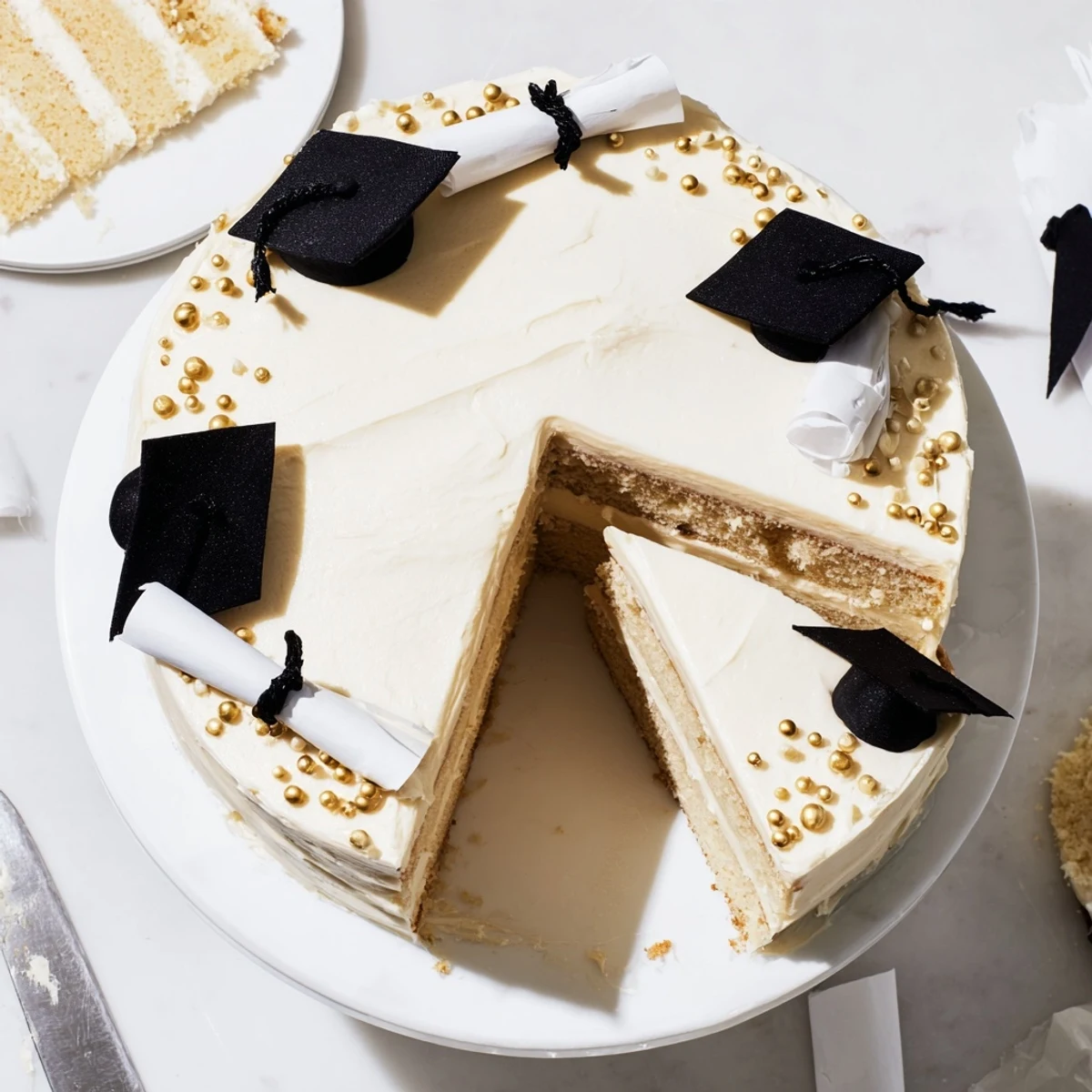
Save This impressive three-layer vanilla cake captures the celebratory spirit of graduation with its moist tender sponge and silky vanilla buttercream. The classic combination works beautifully for any graduate, while the versatile decorating options let you customize colors and themes to match school pride or personal style.
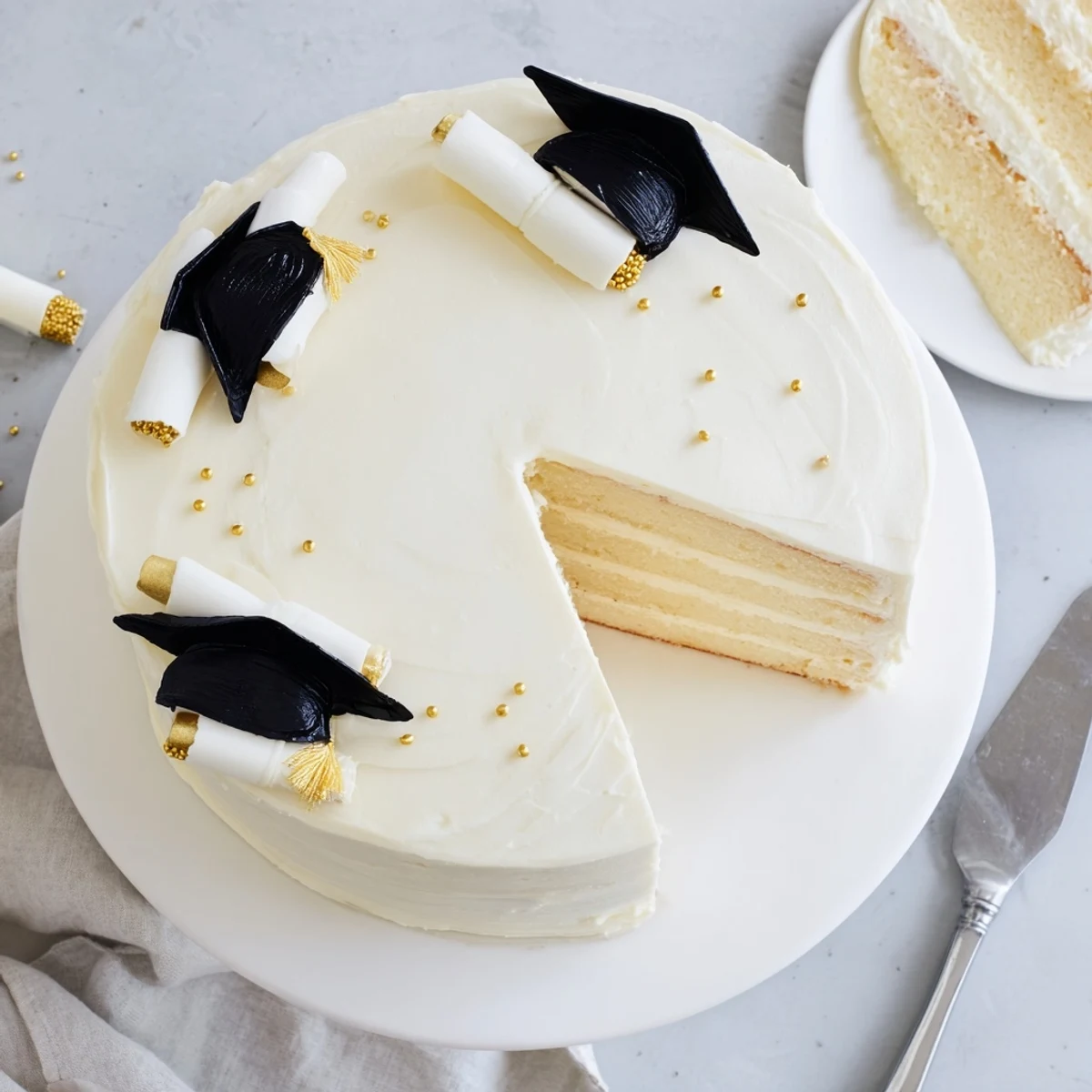
Each layer bakes up golden and tender, thanks to the proper creaming technique and careful alternating addition of flour and milk. The Swiss-style buttercream provides the perfect canvas for edible graduation caps, diplomas, and festive gold accents that make this dessert truly memorable.
The flour dust hung in the kitchen air like confetti before the real confetti even existed, and my sister stood on a step stool watching me panic over her graduation cake at midnight the night before the ceremony.
She told me the cake looked lopsided and I told her she was lopsided, and we both laughed until we realized it was indeed tilting slightly to the left.
Ingredients
- All purpose flour (2 3/4 cups): Spoon and level it gently because packed flour turns your tender sponge into something closer to a doorstop.
- Baking powder (1 tablespoon): Check the expiration date without fail, since old baking powder silently ruins cakes by simply refusing to rise.
- Salt (1/2 teaspoon): Just enough to make the vanilla sing without ever tasting salty.
- Unsalted butter, softened (1 cup for cake, 1 1/2 cups for buttercream): Leave it out for an hour before starting, because cold butter leaves lumps and melted butter changes the entire chemistry.
- Granulated sugar (2 cups): Creaming this properly with butter is what builds the tiny air pockets that make the crumb light.
- Large eggs (4): Room temperature eggs blend into the batter smoothly instead of seizing the cold butter into chunky regret.
- Vanilla extract (2 teaspoons for cake, 2 teaspoons for buttercream): Use the real stuff here, not imitation, because this cake wears its vanilla flavor proudly on its sleeve.
- Whole milk (1 cup): The fat in whole milk gives the crumb a richness that low fat milk simply cannot match.
- Powdered sugar, sifted (6 cups): Sifting is non negotiable unless you enjoy flecks of hard sugar rolling through your silky buttercream.
- Heavy cream (1/4 cup): This transforms stiff buttercream into something spreadable and ethereal.
- Fondant or modeling chocolate in school colors: A small amount goes a long way for caps, diplomas, and tassels.
- Edible gold pearls or sprinkles: These little touches make the cake feel like a celebration happened, not just a dessert.
Instructions
- Preheat and prepare your pans:
- Set your oven to 350 degrees F and grease three 8 inch round pans before lining the bottoms with parchment rounds so nothing sticks when you flip them later.
- Whisk your dry ingredients together:
- In a medium bowl, combine the flour, baking powder, and salt with a whisk until evenly distributed and you see no clumps hiding in the corners.
- Cream butter and sugar until fluffy:
- Beat the softened butter and granulated sugar on medium high speed for a full three to four minutes until the mixture looks pale and cloudlike and has grown noticeably in volume.
- Add eggs and vanilla one at a time:
- Drop in each egg separately, mixing fully before the next addition, then pour in the vanilla and let the mixer run just until everything is smooth and fragrant.
- Alternate flour and milk into the batter:
- Add the flour mixture in three rounds, alternating with the milk in two rounds, starting and ending with flour, and mix only until each addition disappears into the batter.
- Divide and smooth the batter:
- Pour equal amounts into your three prepared pans and use the back of a spoon or a small offset spatula to smooth the tops flat so the layers bake evenly.
- Bake until golden and set:
- Slide the pans into the oven for 25 to 30 minutes, testing with a toothpick in the center that should come out clean when the cakes are perfectly done.
- Cool the cakes completely:
- Let the cakes rest in their pans for ten minutes, then gently invert them onto wire racks and walk away until they reach room temperature with absolutely no warmth left.
- Make the vanilla buttercream:
- Beat the softened butter alone until creamy, then slowly add sifted powdered sugar on low speed before pouring in the cream, vanilla, and a pinch of salt, and whipping everything on high for three full minutes until fluffy and light.
- Stack and frost the layers:
- Level any domed cake tops with a serrated knife, place the first layer on your stand, spread a generous sweep of buttercream, repeat with the remaining layers, then frost the top and sides until completely smooth.
- Decorate for the graduate:
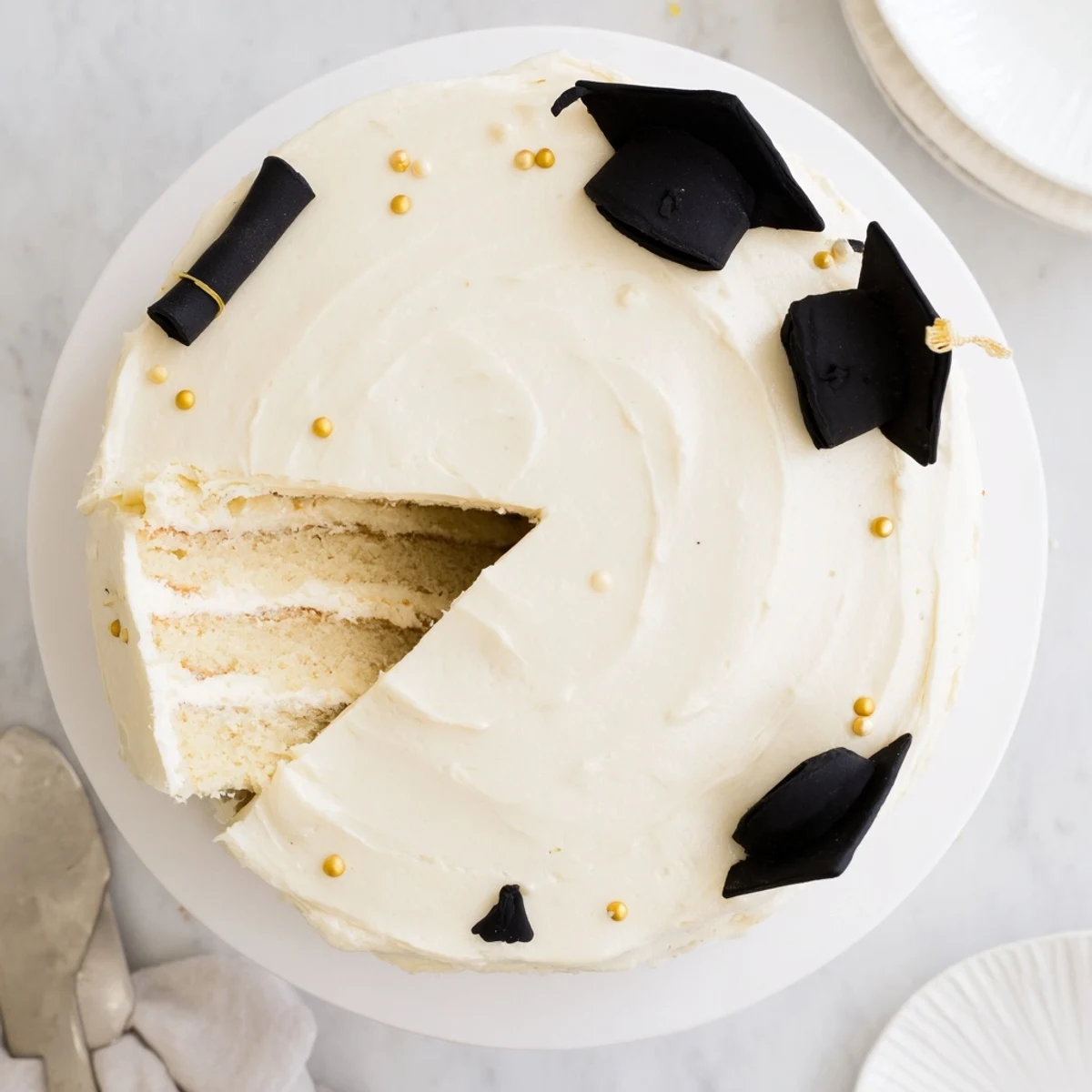
- Arrange fondant graduation caps and diplomas on top, scatter edible gold pearls around the borders, and write the graduates name or class year if you are feeling brave with a piping bag.
 Save
Save When my sister walked into the kitchen the next morning and saw that lopsided cake covered in buttercream and little fondant caps, she teared up before she even tasted it.
Adapting This Cake for Any Celebration
Swap out the graduation toppers for birthday candles, holiday sprinkles, or monogrammed fondant and this exact same cake becomes whatever you need it to be without changing a single thing about the sponge or frosting.
Making It Ahead Without Losing Quality
Bake the layers the day before, wrap each one tightly in plastic wrap, and leave them at room temperature overnight so the crumb actually stays softer than if you frost them warm.
Serving and Storing Leftovers
Sliced cake keeps beautifully under a dome at room temperature for two days and refrigerates well for up to five days if you let it sit out for thirty minutes before serving so the buttercream softens back up.
- Always use a serrated knife and a gentle sawing motion for clean slices.
- Cover cut edges with a piece of parchment or plastic to keep them from drying out.
- Never refrigerate fondant decorations separately because condensation will ruin their finish.
 Save
Save That tilted little cake became a family legend, and every graduation since has required an equally imperfect and equally loved version of it.
Recipe Questions & Answers
- → How far in advance can I bake the cake layers?
-
Bake layers up to 2 days ahead. Wrap cooled cakes tightly in plastic wrap and store at room temperature. Frost the day of serving for freshest results.
- → Can I make this chocolate instead of vanilla?
-
Absolutely. Replace ¾ cup of the all-purpose flour with unsweetened cocoa powder for a rich chocolate version. The buttercream pairs beautifully with chocolate layers.
- → How do I achieve smooth buttercream frosting?
-
Room temperature ingredients are essential. Beat butter until creamy before gradually adding sifted powdered sugar. Whip on high speed for 3-4 minutes until light and fluffy.
- → What's the best way to personalize for the graduate?
-
Use school colors in the buttercream or fondant decorations. Pipe the graduate's name, class year, or degree with additional frosting. Add edible gold pearls for an elegant touch.
- → Can I freeze the unfrosted cake layers?
-
Yes, wrap each cooled layer separately in plastic wrap, then foil. Freeze for up to 3 months. Thaw overnight at room temperature before frosting.