
 Save
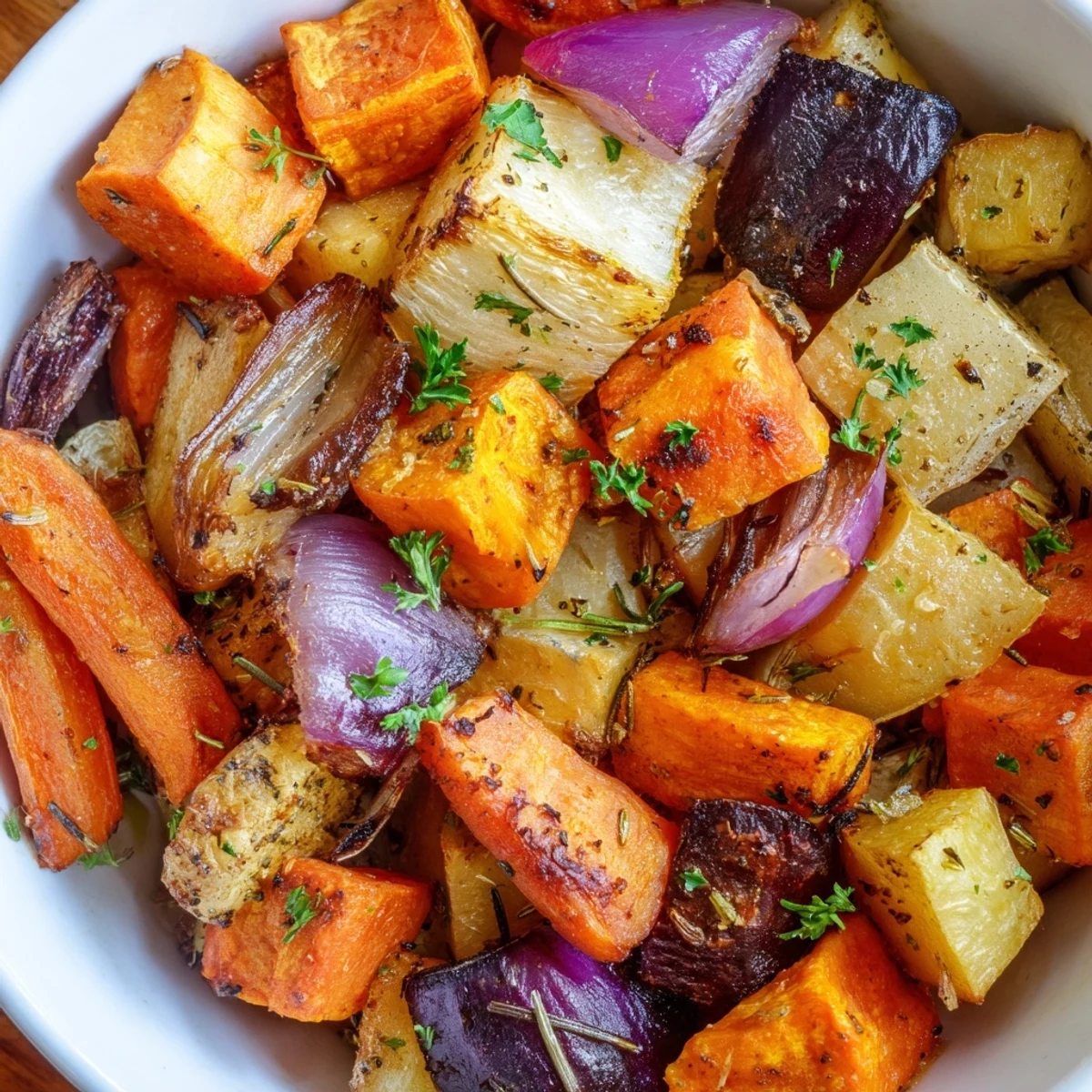
Save This dish features a medley of root vegetables like carrots, parsnips, sweet potatoes, and beets, tossed in olive oil and aromatic dried herbs including thyme, rosemary, and oregano. Roasted at a high temperature until tender and golden, it creates a naturally sweet and earthy flavor profile. Garnished with fresh parsley, this dish complements a variety of meals and suits vegetarian and gluten-free diets. Easy to prepare with simple tools, it offers a wholesome, nourishing option for any occasion.
There's something about a Sunday afternoon when the kitchen smells like roasting vegetables and dried herbs—it pulls people in without them even realizing it. I discovered this combination while standing in front of an almost-empty produce drawer one autumn, determined not to order takeout. The first tray I made was chaotic, vegetables crowded together like they were competing for space, but something about the way the edges caramelized and the herbs bloomed in the heat made me return to this exact method again and again.
I made this for a friend who'd gone vegetarian, and I remember the slight worry I felt before dinner—would it be enough? It was more than enough. She went back for seconds and asked for the recipe, and that moment taught me that vegetables roasted until their edges char aren't a side dish masquerading as a main. They're the real thing.
Ingredients
- Carrots: They sweeten as they roast, so choose ones that feel firm when you pick them up.
- Parsnips: These earthy roots add a subtle sweetness that balances the other vegetables beautifully.
- Sweet potato: The softer texture means it'll cook faster, so cut it slightly larger than the others if you want it to finish at the same time.
- Red onion: Wedges hold their shape and develop a gentle char that tastes almost caramelized.
- Golden beets: Less earthy than their red cousins, they won't bleed color everywhere and add a mild sweetness.
- Yukon Gold potato: Waxy and buttery, these stay intact during roasting instead of falling apart.
- Olive oil: The fat is what creates those crispy, golden edges—don't skimp here.
- Dried thyme, rosemary, and oregano: Together they create an earthy, Mediterranean warmth that tastes like you spent hours on this.
- Sea salt and black pepper: Season generously; roasted vegetables need more salt than you'd think to taste fully awake.
- Fresh parsley: A bright finish that cuts through the richness and adds a color pop at the end.
Instructions
- Get your oven ready:
- Preheat to 425°F and line your baking sheet with parchment paper so nothing sticks and cleanup stays effortless. A hot oven is key—it's what creates that golden, slightly caramelized edge.
- Prep and combine your vegetables:
- Cut everything into roughly 1-inch pieces, aiming for similar sizes so they cook evenly. Throw them all into a large bowl and toss them around—this is where the work happens, so take your time.
- Coat with oil and herbs:
- Drizzle with olive oil and scatter the dried thyme, rosemary, oregano, salt, and pepper over everything. Toss until each piece glistens and every vegetable is touched by the herbs—you'll see flecks of green and brown coating everything.
- Arrange on the pan:
- Spread the vegetables in a single layer, giving them room to breathe. Crowding the pan steams them instead of roasting them, so resist the urge to pile them high.
- Roast and stir halfway:
- Slide into the oven for 40 to 45 minutes, stirring once around the 20-minute mark to ensure even browning. You'll know they're done when the edges are golden and a fork easily pierces even the harder vegetables like beets and carrots.
- Finish and serve:
- Transfer to a serving dish and scatter fresh parsley on top if you have it. Serve hot, while the vegetables still have a slight firmness inside and the edges are still crispy.
 Save
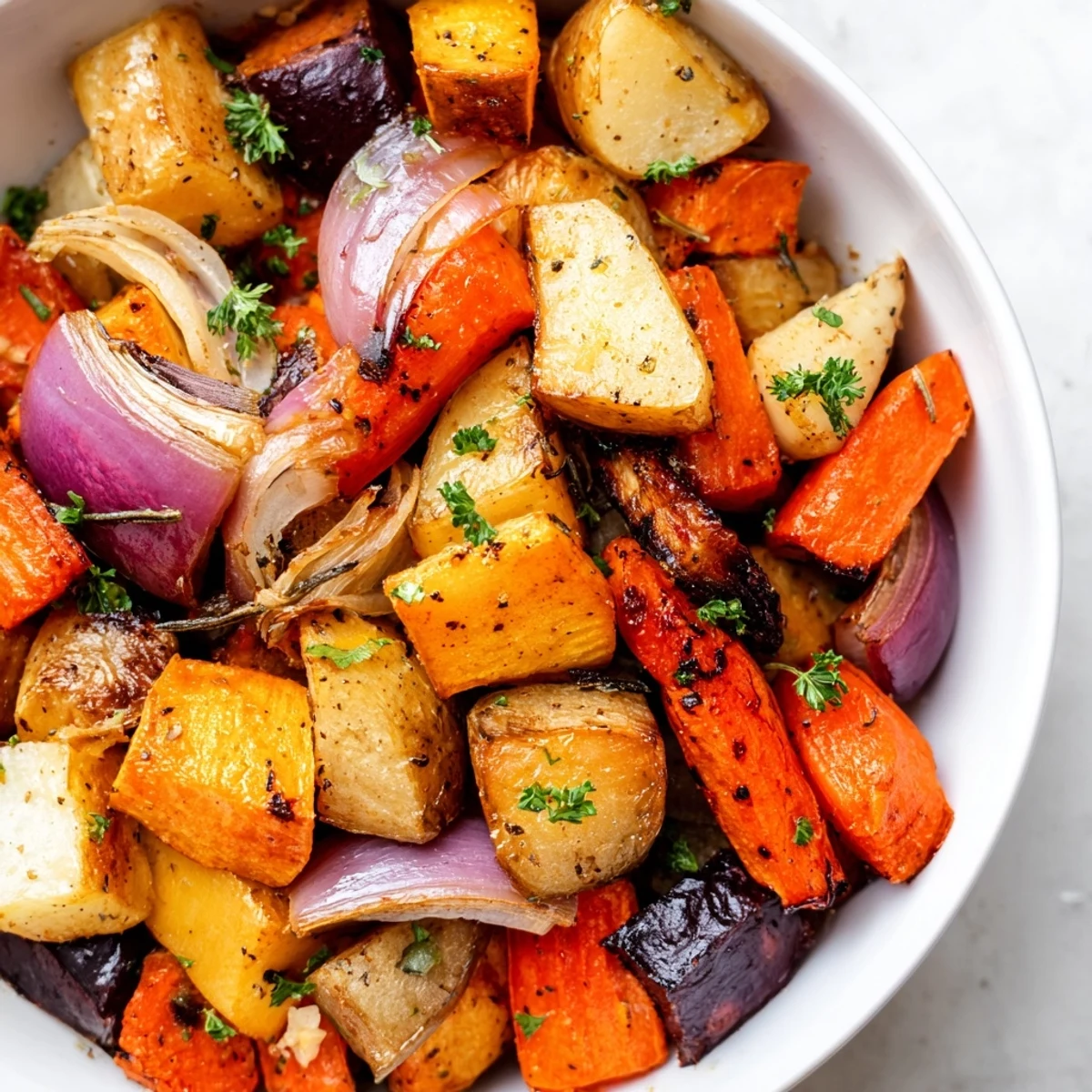
Save What struck me most was serving this to people and watching them eat vegetables like they were the main event, not the supporting role. There's something quietly satisfying about that shift in attention, and it happens again every time I roast a pan of root vegetables.
Why This Works as Both a Side and a Main
On a plate next to roasted chicken or grilled fish, these vegetables shine as a side—earthy, seasoned, perfect. But pile them over warm quinoa, add a dollop of tahini, or serve with crusty bread and they become their own meal. The roasting concentrates their natural sugars and the herbs add enough depth that you don't feel like you're eating around the real food.
The Magic of Dried Herbs
Fresh herbs are wonderful, but dried ones actually belong in roasted dishes—they're concentrated and they bloom in the heat, releasing their oils in a way that transforms the vegetables. I used to think dried herbs were the consolation prize when you couldn't get fresh, but roasting taught me they're the right tool for the job.
Customizing Your Roast
The beauty of this recipe is how forgiving it is with substitutions. Out of parsnips? Use more carrots. Don't have golden beets? Red ones work, though they'll paint everything purple. The core technique stays the same—cut into similar sizes, coat generously with oil and herbs, roast hot until the edges are golden.
- Turnips and rutabagas roast beautifully if you prefer something sharper than sweet potato.
- Add unpeeled garlic cloves for a sweeter, milder garlic flavor that won't overpower anything.
- A pinch of smoked paprika or cumin transforms the flavor profile without breaking what works.
 Save
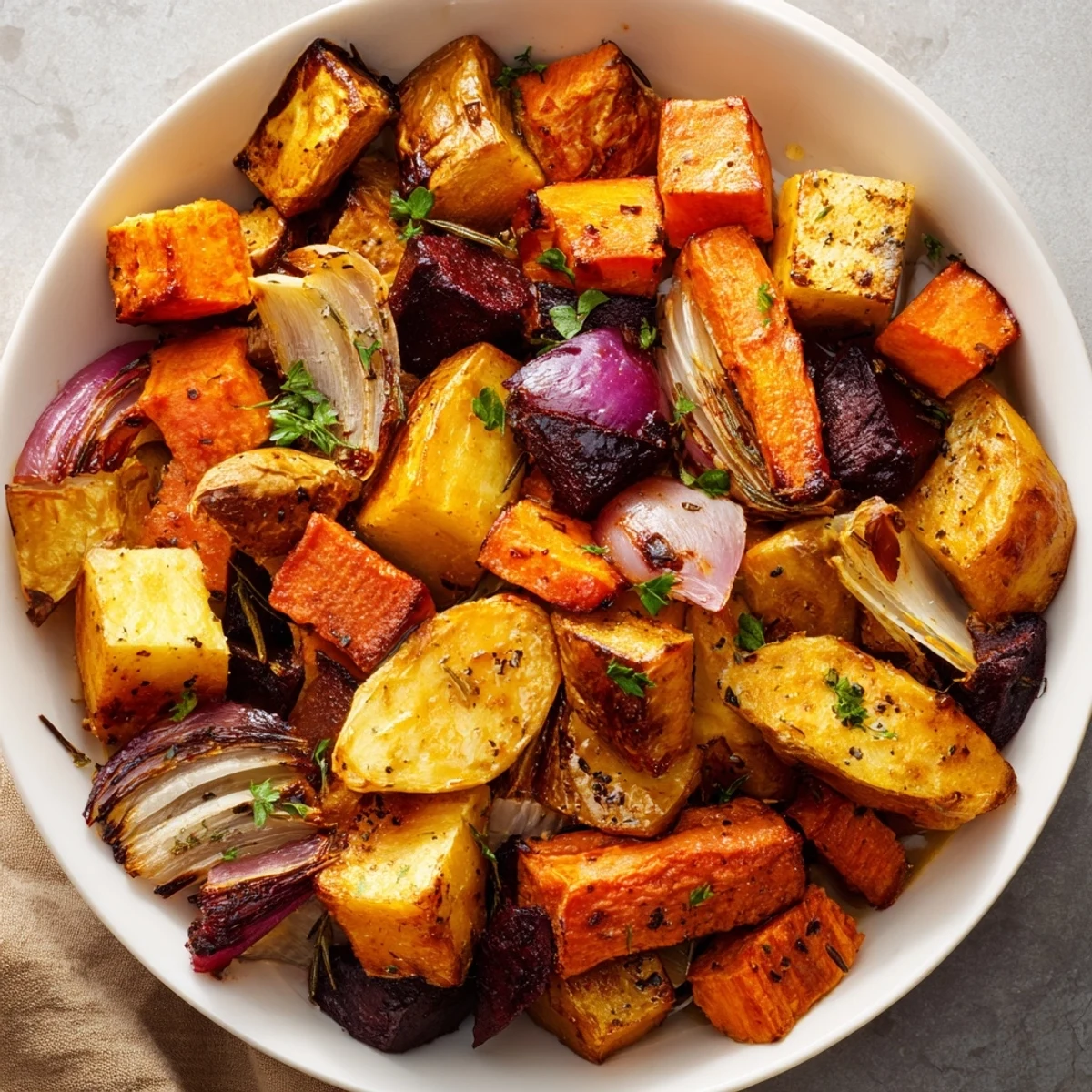
Save Root vegetables roasted until their edges are crispy and their insides are tender taste like comfort that required almost no effort. That's the gift of this recipe—it feels generous on the plate and simple in the making.
Recipe Questions & Answers
- → What vegetables are used in this medley?
-
Carrots, parsnips, sweet potato, red onion, golden beets, and Yukon Gold potato form the root vegetable base.
- → What herbs enhance the flavor of this dish?
-
Dried thyme, rosemary, and oregano blend to provide aromatic seasoning.
- → How long should the vegetables be roasted?
-
Roast at 425°F (220°C) for 40 to 45 minutes until tender and lightly browned.
- → Can other vegetables be substituted?
-
Yes, root vegetables like turnips or rutabaga can be swapped in as preferred.
- → Is this suitable for special diets?
-
It is naturally gluten-free, dairy-free, vegetarian, and free of common allergens.
- → How can flavor be intensified?
-
Adding unpeeled garlic cloves to the roasting pan adds extra aroma and depth.