
 Save
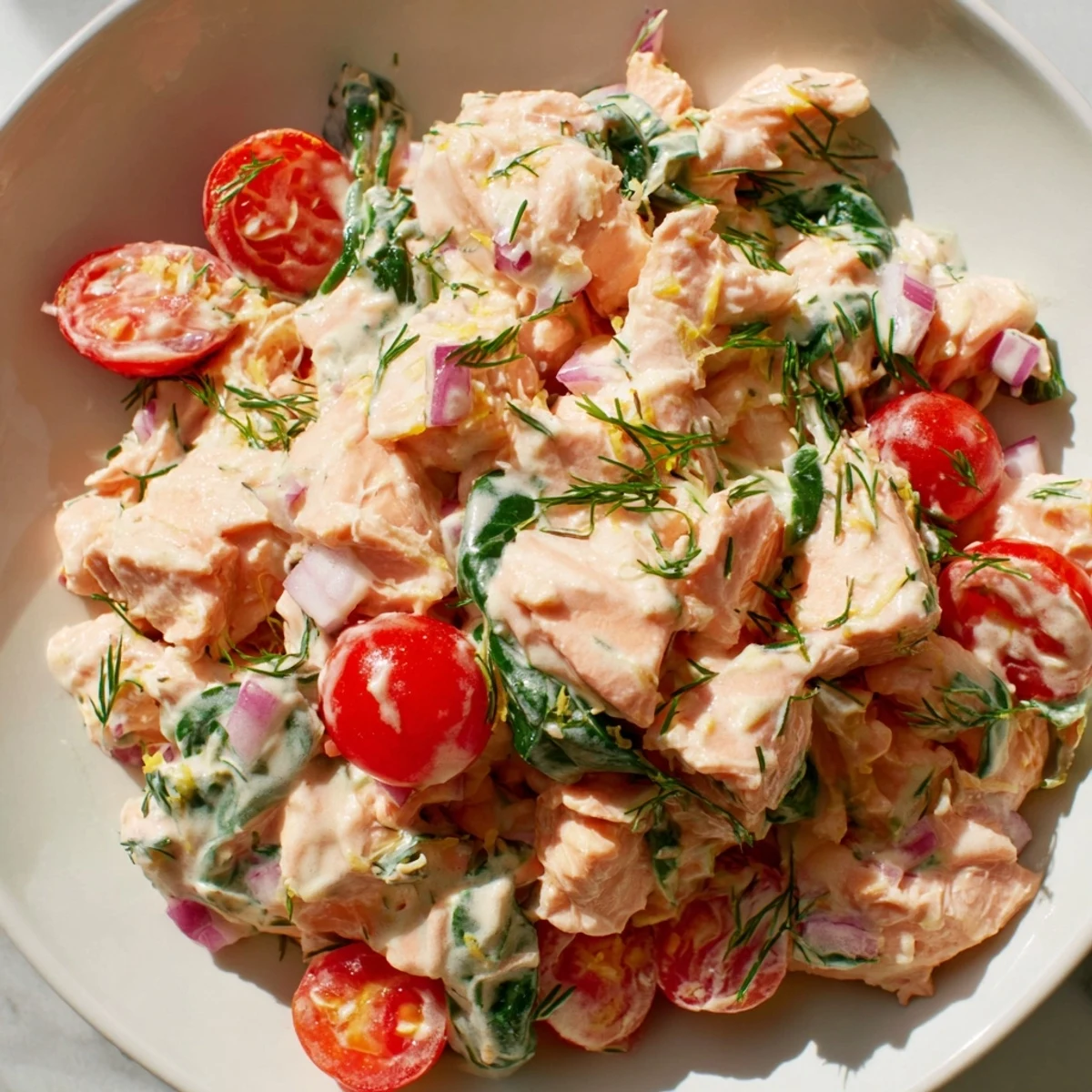
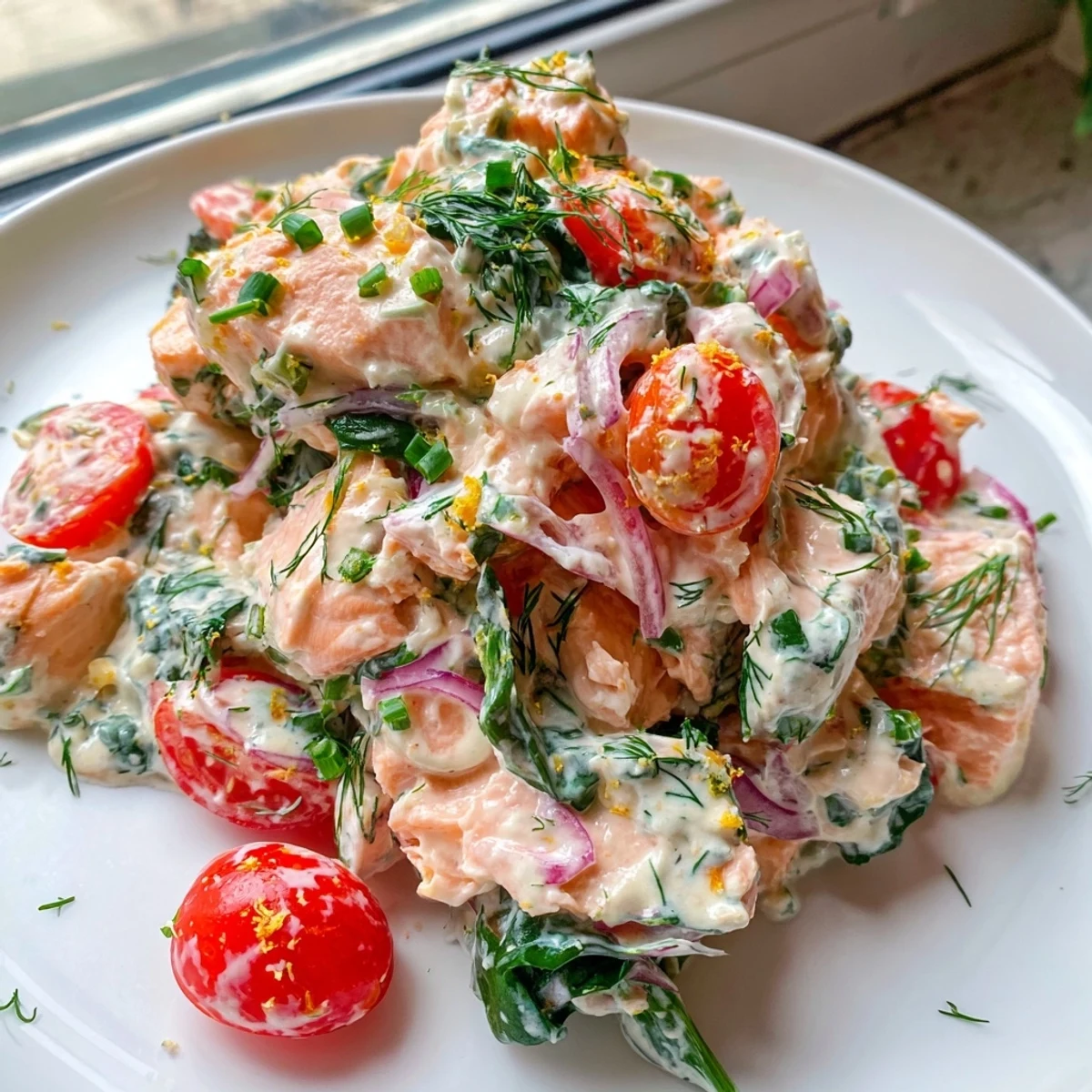
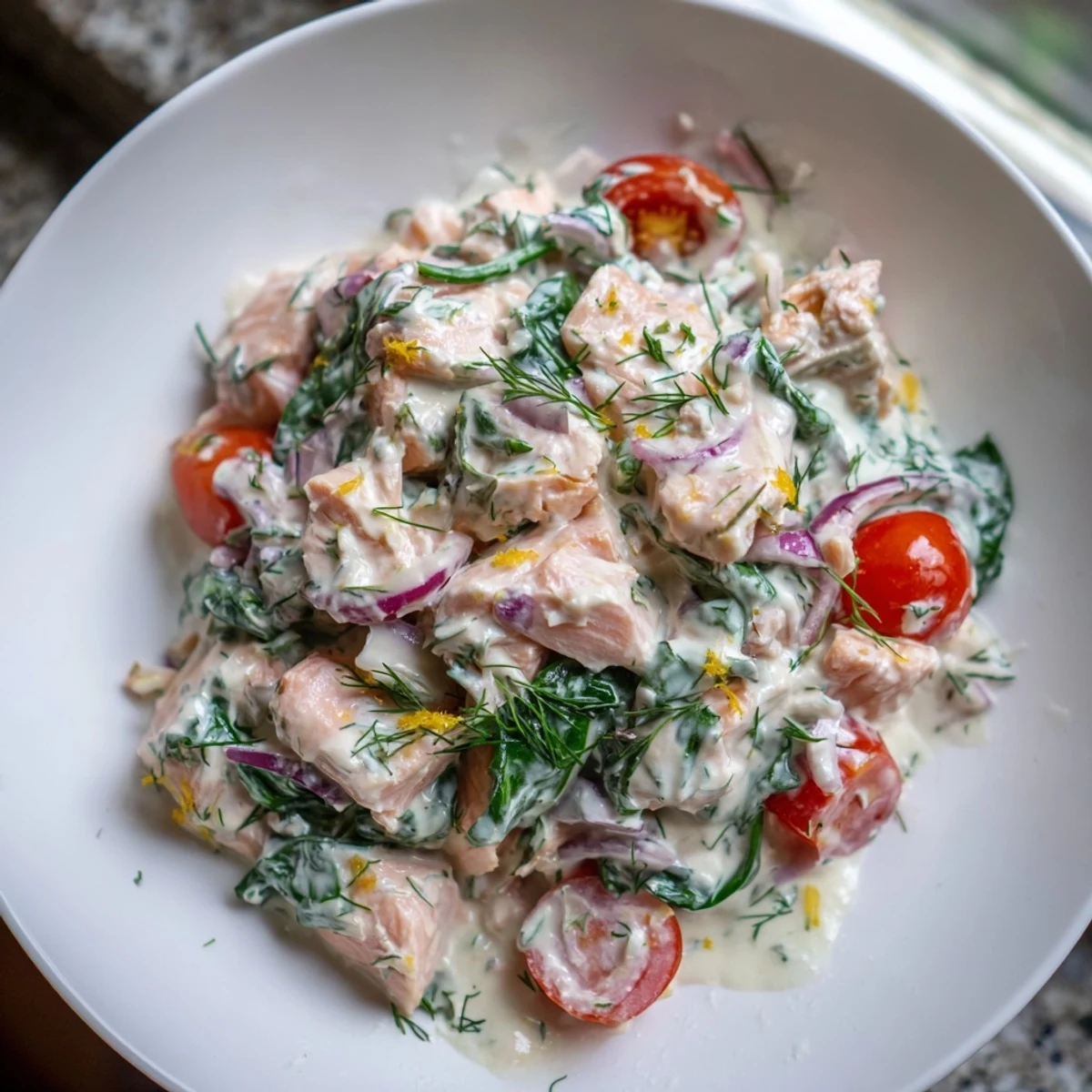
Save This healthy creamy salmon skillet turns yesterday's cooked salmon into something completely new and satisfying. Flaked salmon is gently warmed in a velvety sauce made from Greek yogurt and light cream cheese, then brightened with lemon zest and fresh dill.
Baby spinach and cherry tomatoes add color, nutrients, and a lovely freshness to every bite. The entire dish comes together in just 25 minutes, making it an ideal choice for busy weeknights or a protein-packed lunch.
Serve it over quinoa, rice, or whole-grain pasta for a more filling plate. It's naturally low in carbs and gluten-free when using the right broth, fitting perfectly into a pescatarian lifestyle.
There is something deeply satisfying about opening the fridge the day after a salmon dinner and realizing the leftovers are begging for a second act. This creamy skillet transformation came together one rainy Tuesday when the only things standing between me and a sad desk lunch were flaked salmon, a half used tub of Greek yogurt, and a container of cherry tomatoes on the verge of wrinkling. Twenty five minutes later I was eating something that felt intentionally luxurious rather than thrown together. Now it is the recipe I reach for whenever cooked salmon needs redeeming.
I made this for my neighbor Carla once when she stopped by to return a borrowed casserole dish and ended up staying for lunch. She stood in the kitchen eating straight from the skillet with a chunk of bread and told me it was the best accidental meal she had ever had. We now have an unspoken agreement that whenever I make salmon the night before she should wander over around noon.
Ingredients
- 2 cups cooked salmon (flaked, skin and bones removed): Leftover grilled or baked salmon works beautifully and flaking it into chunky pieces keeps the texture satisfying rather than mushy.
- 1/2 cup Greek yogurt (or reduced fat creme fraiche): This is the creamy backbone of the dish and full fat Greek yogurt gives the richest result without needing actual cream.
- 1/4 cup light cream cheese (softened): Letting it come to room temp first prevents weird lumps when it melts into the sauce.
- 1 cup baby spinach (chopped): A quick rough chop helps it wilt evenly and disappear into the creamy base so even spinach skeptics will not complain.
- 1 cup cherry tomatoes (halved): Their natural sweetness balances the tangy yogurt and lemon beautifully.
- 1/2 small red onion (thinly sliced): Thin slices melt into soft sweetness as they cook and give the dish a gentle bite.
- 1 clove garlic (minced): Just one clove is enough to perfume the whole pan without overpowering the delicate salmon.
- 1/2 cup low sodium chicken or vegetable broth: This loosens the sauce to the perfect consistency and adds savory depth without extra salt.
- 1 tablespoon fresh dill (chopped, or 1 teaspoon dried dill): Dill and salmon are a classic pair for good reason and the fresh herb brightens every bite.
- 1/2 teaspoon lemon zest: The zest carries fragrant oils that make the dish taste sunny and alive.
- Juice of 1/2 lemon: A squeeze at the end wakes up all the flavors and cuts through the richness.
- 1/4 teaspoon black pepper: Freshly cracked is always worth the extra five seconds.
- 1/4 teaspoon salt (to taste): Start light since the broth and cheese already bring sodium to the party.
- 2 tablespoons chives (chopped): Scattered on top at the end for a mild oniony finish and a pop of green.
- Cooked quinoa, rice, or whole grain pasta (optional, for serving): Something starchy underneath turns this from a skillet meal into a proper dinner.
Instructions
- Wake Up the Aromatics:
- Heat your largest non stick skillet over medium heat with a small splash of oil or broth and add the sliced red onion and minced garlic, stirring until the kitchen smells warm and sweet and everything is soft and translucent, about two to three minutes.
- Bring In the Color:
- Toss in the chopped spinach and halved cherry tomatoes, letting them cook for another two to three minutes until the spinach has collapsed into bright green ribbons and the tomatoes soften and release their juices into the pan.
- Build the Creamy Sauce:
- Pour in the broth and add the softened cream cheese and Greek yogurt, stirring patiently as the dairy melts and merges into a smooth glossy sauce that coats the back of your spoon, about two minutes.
- Welcome the Salmon Home:
- Gently fold in the flaked salmon along with the dill, lemon zest, lemon juice, salt, and pepper, taking care not to crush the fish pieces as you let everything warm through together for two to three minutes until the salmon is heated but not overcooked.
- Taste and Finish:
- Give it a final taste and adjust the salt or lemon if needed, then spoon it hot onto plates or bowls, scatter the chopped chives over the top, and serve over quinoa, rice, or pasta if you like a little something underneath to soak up that sauce.
 Save
Save The thing I love most about this recipe is that it turned leftover salmon from a chore into something I actually look forward to the next day. Some of my favorite meals have been the ones I never planned.
What to Serve Alongside
A dry Sauvignon Blanc is my go to pairing here because its crisp acidity mirrors the lemon and cuts right through the creamy sauce. If you are skipping wine, a sparkling water with a lemon wedge does something surprisingly similar. A simple side salad with a vinaigrette also works wonders for adding crunch and contrast to the soft, saucy main.
Swaps and Variations
Kale or Swiss chard can step in for the spinach if you want a heartier, more earthy green that stands up to the creamy base. Tossing in leftover roasted vegetables like zucchini or bell peppers is a brilliant way to bulk it out and reduce waste even further. For a dairy free version, unflavored plant based yogurt and a vegan cream cheese alternative work surprisingly well, though the sauce will be slightly thinner and tangier.
Storage and Reheating
This keeps beautifully in an airtight container in the fridge for up to two days and reheats gently on the stove with a splash of extra broth to loosen the sauce back up. The microwave works in a pinch but stir halfway through so the edges do not get rubbery while the center stays cold.
- Let leftovers cool completely before covering and refrigerating to prevent condensation from making the sauce watery.
- Avoid freezing because the yogurt based sauce will separate and turn grainy when thawed.
- Always taste for seasoning again after reheating because cold dulls flavors and a tiny pinch of salt or squeeze of lemon can bring it back to life.
 Save
Save Keep this one in your back pocket for the day after any salmon dinner and trust me you will never look at leftovers the same way again. It is comfort food disguised as something practical.
Recipe Questions & Answers
- → Can I use canned salmon instead of leftover cooked salmon?
-
Yes, canned salmon works well as a substitute. Drain it thoroughly and remove any skin or bones before flaking it into the skillet. The texture will be slightly different but still delicious and convenient.
- → How do I store and reheat the leftovers?
-
Store any leftovers in an airtight container in the refrigerator for up to 2 days. Reheat gently in a skillet over low heat, adding a splash of broth to loosen the sauce. Avoid microwaving on high, as the yogurt sauce may separate.
- → What can I substitute for Greek yogurt in the creamy sauce?
-
Reduced-fat crème fraîche is a great alternative mentioned in the ingredients. You can also use unflavored plant-based yogurt for a dairy-free version, or silken tofu blended with a bit of lemon juice for a vegan-friendly creaminess.
- → Is this dish suitable for meal prep?
-
Absolutely. You can prepare the vegetable and sauce base ahead of time and keep it refrigerated for up to a day. When ready to serve, simply reheat the base and fold in the flaked salmon until warmed through. This keeps the salmon from overcooking.
- → What side dishes pair well with this creamy salmon?
-
Quinoa, brown rice, or whole-grain pasta are excellent bases that soak up the creamy sauce beautifully. For a lighter option, serve it alongside a crisp green salad or roasted asparagus. A dry white wine like Sauvignon Blanc complements the flavors nicely.
- → Can I add more vegetables to this dish?
-
Definitely. Leftover cooked vegetables like broccoli, zucchini, or bell peppers can be tossed in with the spinach and tomatoes. For a bolder flavor, swap the spinach for kale or Swiss chard. Just adjust the cooking time slightly for heartier greens.