
 Save
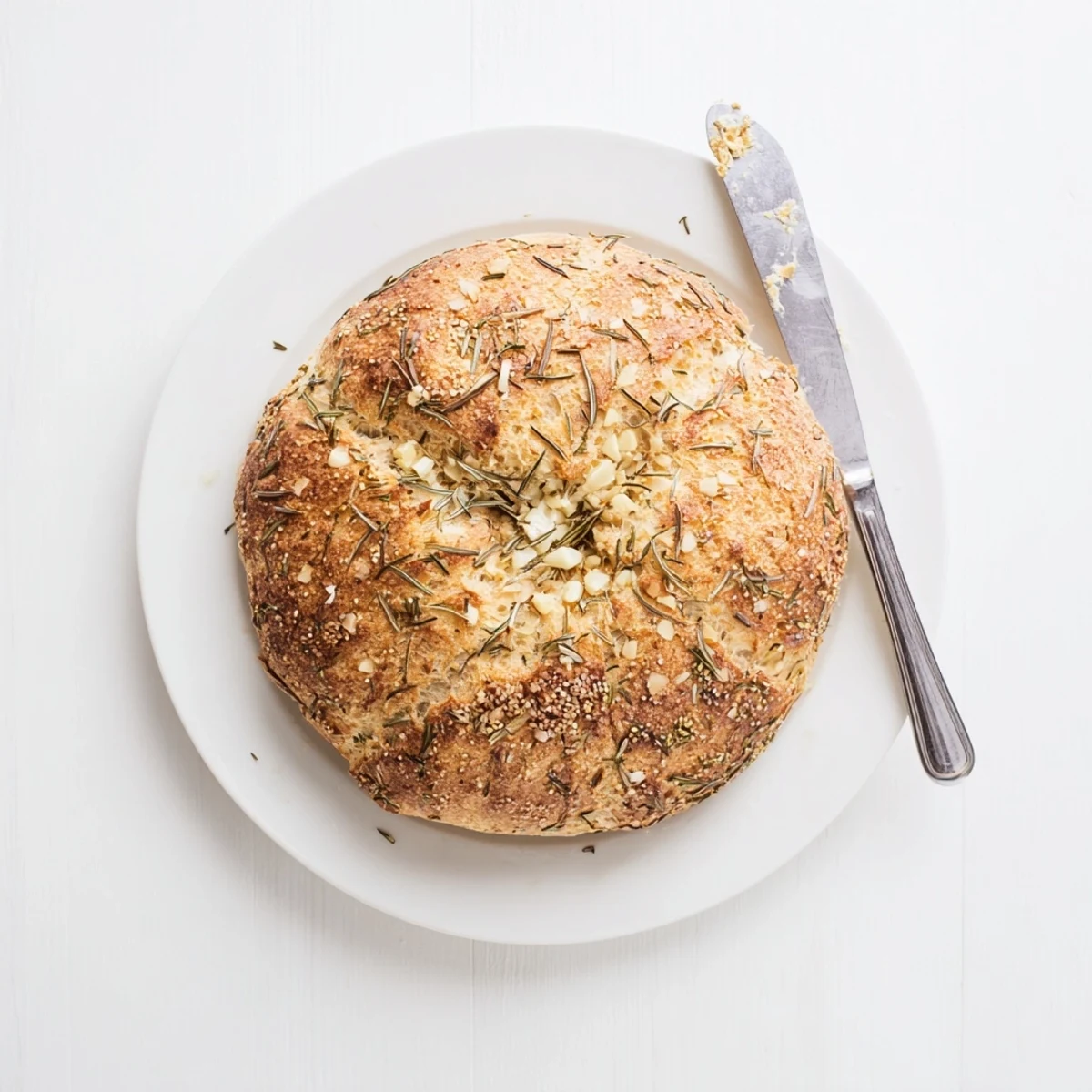
Save Create bakery-quality garlic rosemary bread at home using a simple Dutch oven technique. This rustic European-style loaf combines aromatic fresh garlic and finely chopped rosemary for incredible depth of flavor. The Dutch oven creates perfect steam, resulting in an irresistibly crisp, golden crust that protects a tender, airy interior. With just 20 minutes of active preparation and a hands-off rising process, you'll enjoy professional bakery results with minimal effort.
The whole house fills with this incredible roasted garlic aroma that makes it impossible to wait for slicing. I pulled my first loaf out on a rainy Sunday afternoon and honestly forgot about everything else on my to-do list.
My sister stayed over during a particularly rough week and this bread came out of the oven right as she walked through the door. She took one bite, sat down at the counter, and we ended up just talking and eating warm slices with butter until the whole loaf disappeared.
Ingredients
- Bread flour: Higher protein content gives you that beautiful chew and oven spring, all-purpose works but the texture changes slightly
- Fine sea salt: Coarser salt can leave salty spots if it doesnt dissolve completely into the dough
- Active dry yeast: One tiny packet does all the work, just make sure your water feels like bath temperature, not hot
- Lukewarm water: This activates the yeast, too cold and it sleeps, too hot and it dies
- Olive oil: Keeps the crumb tender and adds a subtle richness that balances the sharp garlic
- Garlic: Fresh minced gives the best punch, but roasted garlic folded in at the end makes it mellow and sweet
- Fresh rosemary: Dried herbs can taste dusty here, the fresh needles release these incredible oils during baking
- Extra flour for dusting: Prevents sticking and gives the loaf that rustic, flour-dusted bakery look
Instructions
- Mix the dough:
- Whisk flour, salt, and yeast in a large bowl, then pour in the water and olive oil. Stir until everything comes together into a rough, shaggy mass. Sprinkle in your minced garlic and chopped rosemary, folding gently to scatter them throughout.
- Let it rise:
- Cover the bowl with plastic wrap or a clean damp towel and walk away. The dough needs about 2 to 3 hours at room temperature to puff up and double in size.
- Shape the loaf:
- Dump the risen dough onto a floured surface and use floured hands to tuck the edges underneath, forming a round ball. Place it seam-side down on a piece of parchment paper, cover loosely, and let it puff up again for 30 to 45 minutes.
- Preheat your Dutch oven:
- Put your Dutch oven and its lid into the oven and crank it to 450°F. Let it heat for at least 30 minutes so the pot gets screaming hot, which creates that incredible crust.
- Bake with steam:
- Carefully lift the parchment with your dough and lower it into the hot Dutch oven. Cover with the lid and bake for 30 minutes, then remove the lid and let it go another 12 to 15 minutes until the crust turns deep golden brown.
- Cool completely:
- Lift the bread out and set it on a cooling rack for at least 20 minutes. Slicing too early steam-softens that perfect crust you just worked so hard to achieve.
 Save
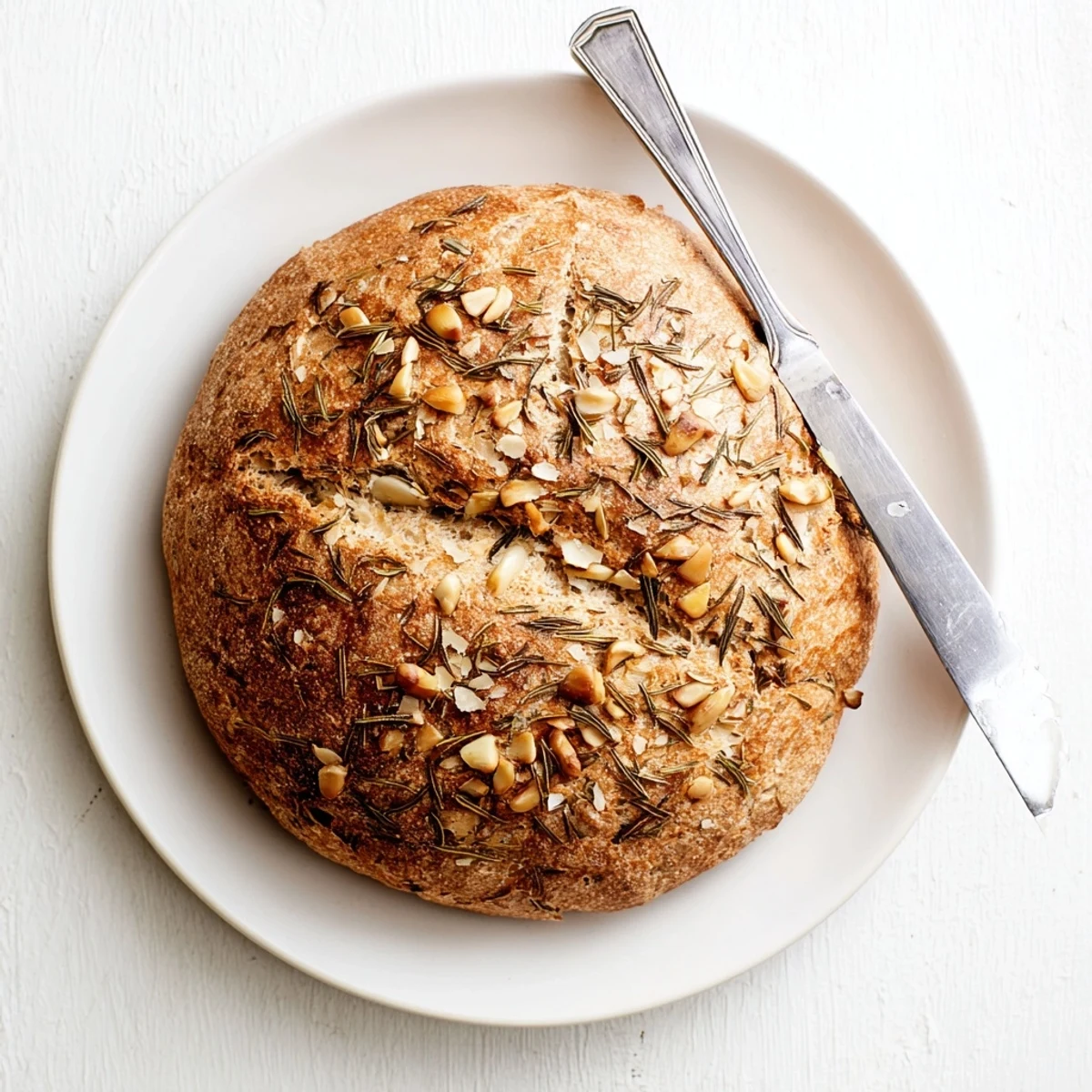
Save This bread became my go-to for housewarming gifts after a neighbor texted me three days later asking for the recipe. There is something about pulling apart warm, garlic-scented bread with your hands that just makes people relax.
Getting The Best Rise
Dough temperature matters more than most recipes admit. If your kitchen runs cold, the rise might take closer to 4 hours. On hot summer days, check it after 90 minutes. The dough is ready when you press a finger into it and the indentation stays rather than bouncing back.
Creating Restaurant Quality Crust
The Dutch oven technique essentially creates a steam chamber, exactly what professional bread ovens do. That trapped moisture keeps the crust soft initially, letting the bread expand fully before the final dry heat produces that crackle and crunch. No Dutch oven, no problem, a heavy oven-safe pot with a tight lid works too.
Customization Ideas
Once you master the base recipe, the variations are endless. Fold in chopped kalamata olives during the mixing step for a Mediterranean twist. Swap rosemary for fresh thyme and add chunks of aged cheddar.
- Substitute a quarter cup of the water with white wine for subtle complexity
- Halve the garlic and add roasted red peppers for sweetness
- Try adding 2 tablespoons of everything bagel seasoning to the flour mixture
 Save
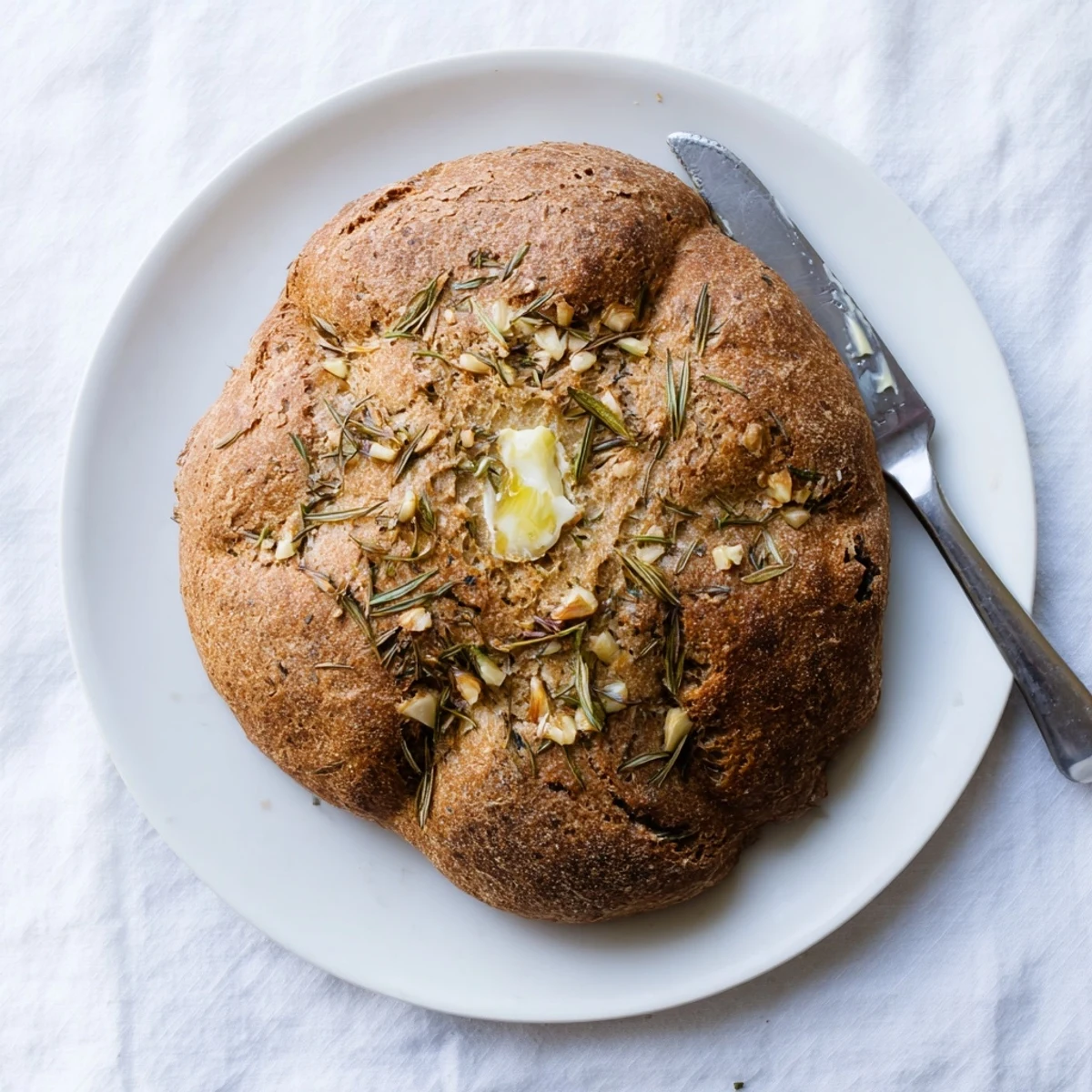
Save There is nothing quite like tearing into a still-warm slice, watching steam curl off the garlic-studded crumb. This bread turns ordinary weeknight dinners into something special.
Recipe Questions & Answers
- → Why use a Dutch oven for bread?
-
A Dutch oven traps steam during baking, creating the perfect environment for a crispy, golden crust while keeping the interior soft and tender.
- → Can I use dried rosemary instead of fresh?
-
Yes, use 1 tablespoon of dried rosemary in place of 2 tablespoons fresh. The flavor will be more concentrated, so adjust to taste.
- → How do I know when the bread is done?
-
The crust should be deep golden brown, and the bread should sound hollow when tapped on the bottom. An instant thermometer inserted into the center should read 200°F.
- → Can I make this dough ahead of time?
-
Yes, after the first rise, refrigerate the dough for up to 24 hours. Let it come to room temperature for 30 minutes before shaping and baking.
- → What can I serve with garlic rosemary bread?
-
Pair with soups, stews, pasta dishes, or serve alongside olive oil for dipping. Excellent for bruschetta or as a base for gourmet sandwiches.