
 Save
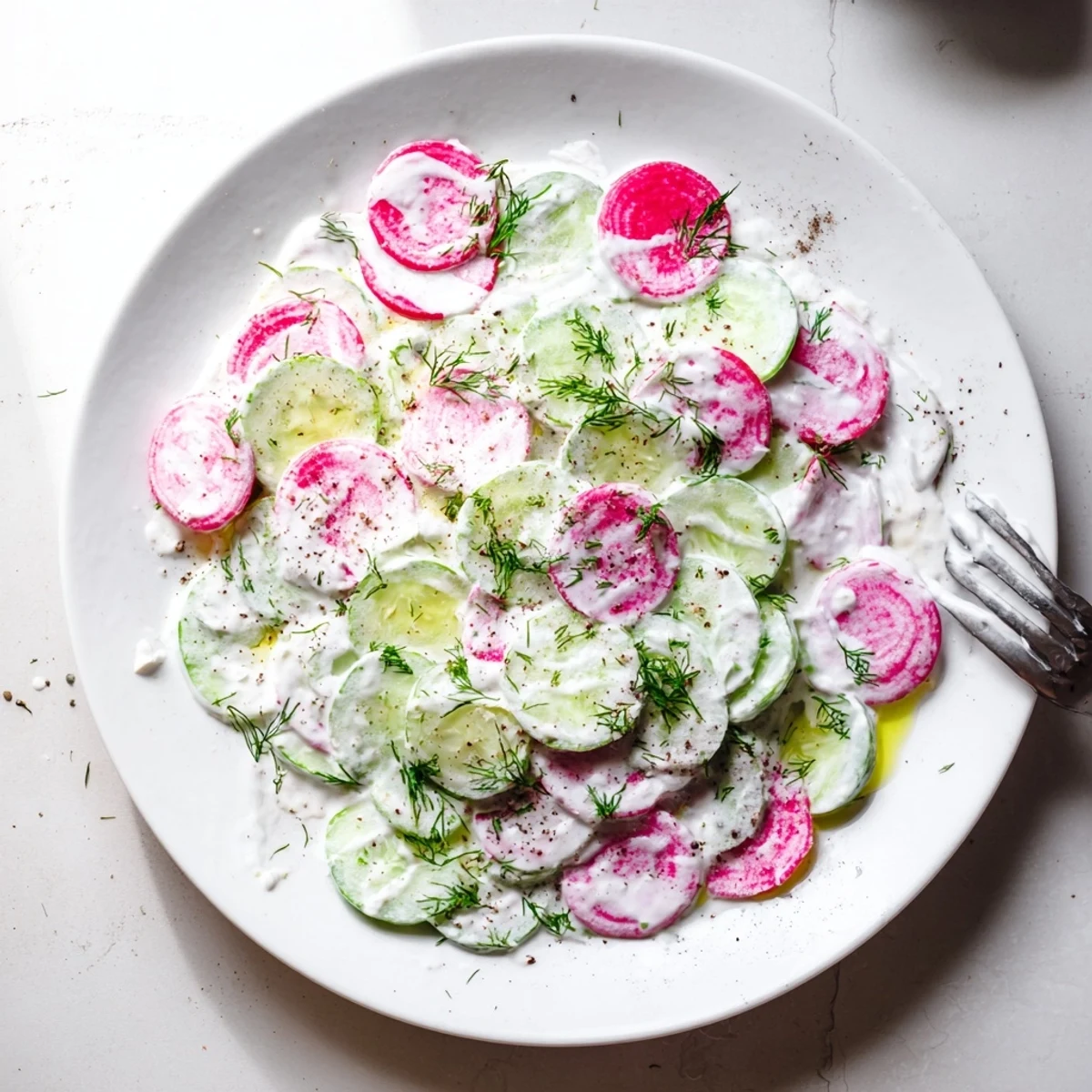
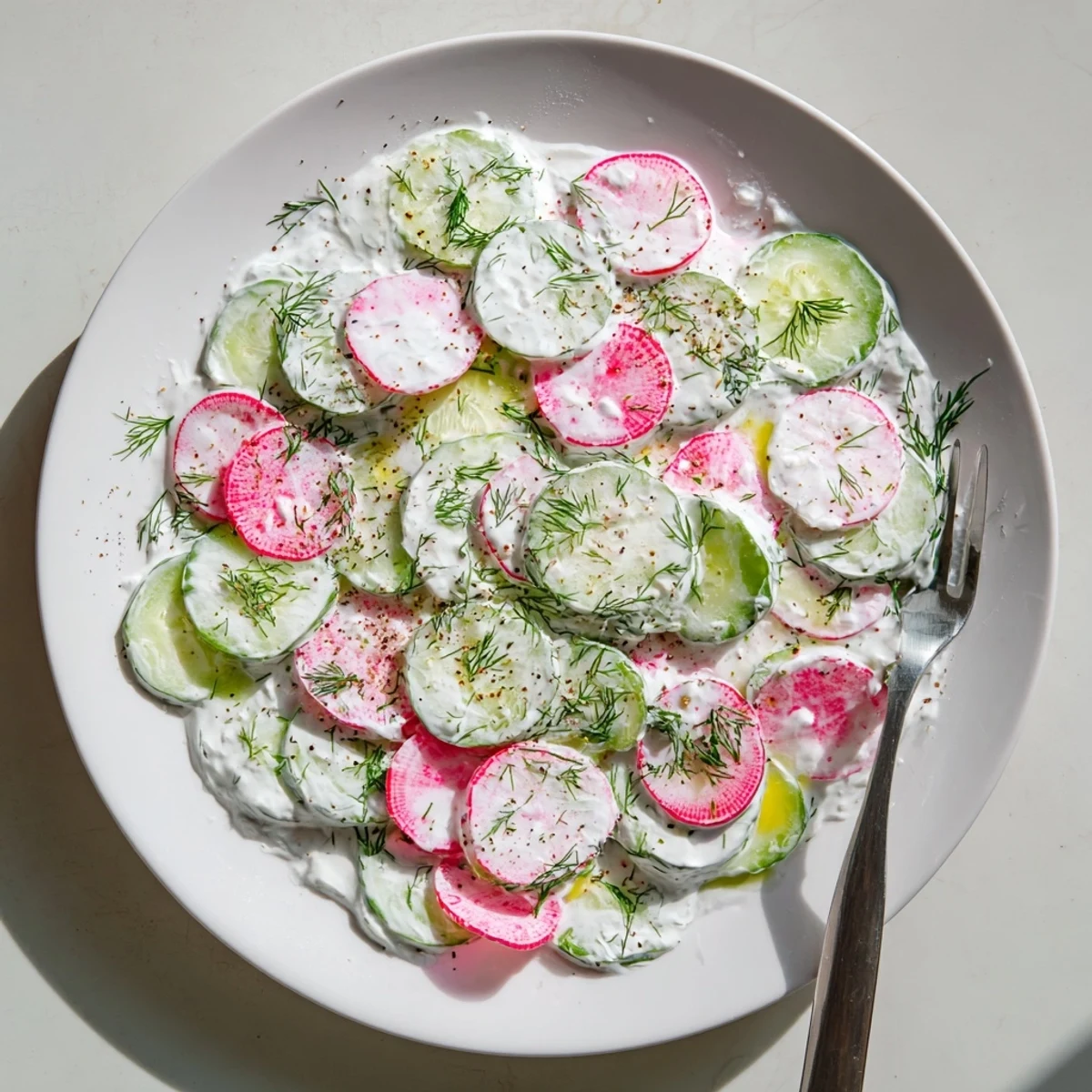
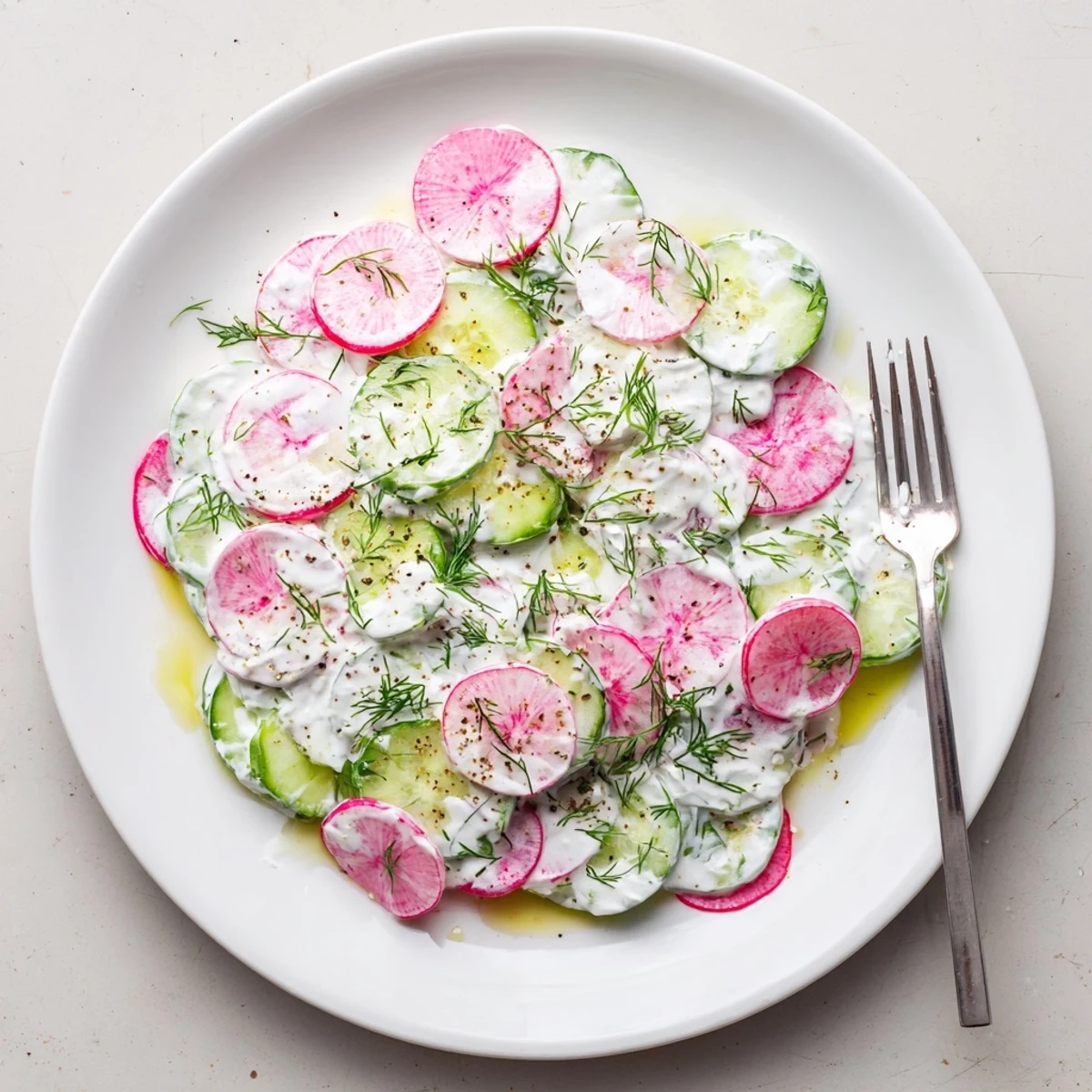
Save This cucumber radish yogurt dill salad comes together in just 15 minutes with no cooking required. Thinly sliced cucumbers and peppery radishes are coated in a creamy Greek yogurt dressing infused with fresh dill, garlic, and a splash of lemon juice.
It's a light, refreshing side dish that pairs beautifully with grilled fish, works well on a mezze platter, or stands alone as a quick appetizer. Naturally vegetarian, gluten-free, and low in carbs.
The crunch is what gets you first. That sharp, wet snap of a radish slice between your teeth followed by the cool hush of cucumber and yogurt coating everything in something almost forgiving. I threw this together one humid July evening when the stove felt like an enemy and the fridge was my only ally. It took fifteen minutes and zero cooking, which is exactly the kind of math my kitchen brain loves in summer.
I served this at a backyard picnic where three people stood around the bowl with forks and no plates, abandoning the grilled fish entirely. My neighbor called it deconstructed tzatziki, which I suppose is fair, but I think it deserves its own name.
Ingredients
- 2 medium cucumbers, thinly sliced: English or Persian cucumbers work best because the seeds are small and the skin is tender, so you can skip peeling entirely.
- 1 bunch radishes (about 8), thinly sliced: Look for firm radishes with vibrant green leaves still attached, which tells you they were pulled recently and havent been sitting in water.
- 1 cup plain Greek yogurt: Full fat yogurt gives the dressing a luxurious body, but two percent also works if that is what you have on hand.
- 2 tbsp fresh dill, finely chopped: Dried dill will do in winter, but fresh dill has a grassy sweetness that makes this salad sing, so use it whenever possible.
- 1 clove garlic, minced: One clove is enough to add warmth without hijacking the whole bowl, and mincing it very fine prevents any unpleasant raw garlic bites.
- 1 tbsp lemon juice: Fresh lemon juice brightens the yogurt and lifts the heaviness, so do not substitute bottled if you can help it.
- 1 tbsp extra virgin olive oil: A small amount rounds out the dressing and adds a subtle fruitiness that ties the raw vegetables to the dairy.
- Salt and freshly ground black pepper: Seasoning is what turns a bowl of vegetables into a dish, so taste as you go and trust your palate.
Instructions
- Prepare the vegetables:
- Slice the cucumbers and radishes as thin and even as you can manage, because uniform slices mean every bite carries the same balance of crunch and cream. A sharp knife makes this satisfying work rather than a chore.
- Build the dressing:
- In a small bowl, whisk the yogurt, dill, garlic, lemon juice, olive oil, salt, and pepper until the mixture is completely smooth and slightly pale green from the herbs. Stop and smell it, because that is how you know the garlic and dill have married.
- Bring it all together:
- Pour the dressing over the sliced vegetables and fold gently with a spatula or large spoon, trying not to crush the radishes. You want every piece coated but still recognizable, not a soupy mess.
- Taste and adjust:
- Take a forkful and chew slowly, noticing whether it needs more salt, a squeeze more lemon, or another crack of pepper. This small pause is the difference between a good salad and one people remember.
- Chill or serve immediately:
- Ten minutes in the refrigerator lets the flavors settle and the vegetables release a little moisture into the dressing. You can also eat it right away if patience is not your virtue today.
 Save
Save There is something quietly thrilling about a dish that needs no fire, no patience, and no special equipment, just a knife and a bowl and the willingness to let simple ingredients speak. This salad taught me that sometimes the best cooking is really just thoughtful assembling.
Serving Ideas That Actually Work
This salad sits happily next to grilled salmon or lamb, scoops beautifully onto warm pita, and even works piled on toast with a fried egg on top. I once watched a friend eat the leftovers cold from the container standing in front of the open refrigerator, which might be the highest compliment.
Swaps and Substitutions
Plant-based yogurt turns this vegan without much sacrifice in texture, though you may want an extra squeeze of lemon to compensate for the tang difference. A handful of toasted walnuts or sunflower seeds scattered on top adds crunch and turns a side dish into something filling enough for lunch.
Tools and Prep Notes
All you truly need is a sharp chef knife, a sturdy cutting board, two mixing bowls, and a whisk or fork, so cleanup is almost nonexistent. A mandoline makes the radish slicing go faster, but your knife hand is perfectly sufficient if you take your time.
- Slice radishes from stem end to root end for the most even rounds.
- Pat cucumber slices dry with a clean towel if they seem wet after cutting.
- Always wash dill under cold water and shake it dry before chopping to remove any grit hidden in the fronds.
 Save
Save Keep this one in your back pocket for every hot night, every last minute gathering, and every moment when cooking feels like too much but eating something good does not. It will never let you down.
Recipe Questions & Answers
- → Can I make this salad ahead of time?
-
Yes, you can prepare it up to 4 hours in advance. The flavors actually develop nicely as it chills. Keep it refrigerated in an airtight container and give it a gentle stir before serving.
- → What can I substitute for Greek yogurt?
-
Plain regular yogurt works but will be thinner — strain it through cheesecloth for 30 minutes first. For a dairy-free version, use a thick plant-based yogurt such as coconut or almond based.
- → How do I keep the cucumbers from making it watery?
-
Slice the cucumbers, sprinkle lightly with salt, and let them sit for 10 minutes. Then pat them dry with a paper towel before adding the dressing. This draws out excess moisture and keeps the salad creamy.
- → What does this salad pair well with?
-
It complements grilled fish, roasted chicken, or lamb dishes beautifully. You can also serve it as part of a mezze platter alongside hummus, pita, and olives for a spreading-style meal.
- → How long does leftover salad last in the fridge?
-
Store leftovers in an airtight container for up to 2 days. The vegetables will release some liquid as they sit, so drain off any excess and give it a quick stir before serving again.