
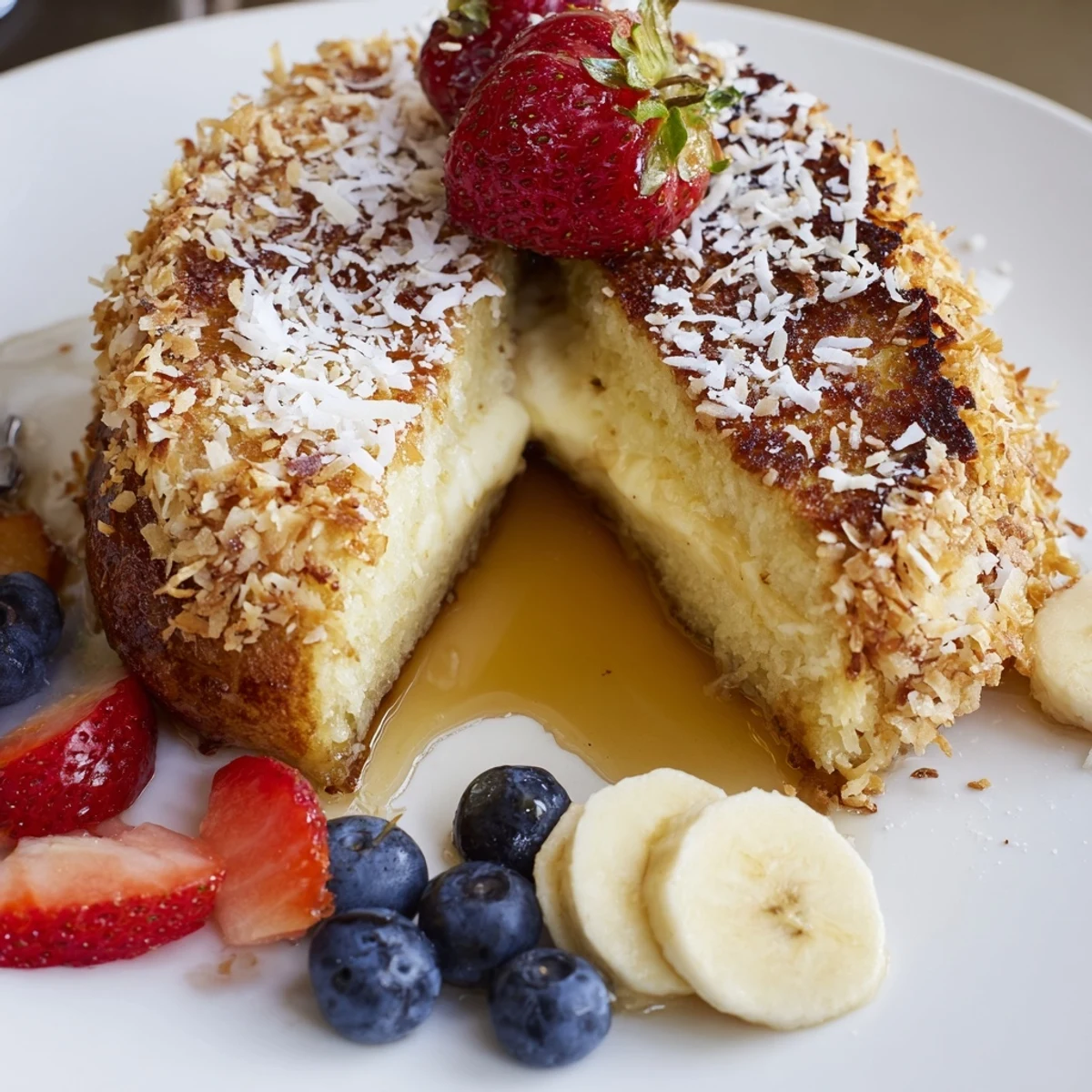
 Save
Save Whisk eggs with milk, sugar, vanilla and cinnamon to form a smooth custard. Soak thick brioche or challah slices briefly—avoid sogginess—then press both sides into shredded coconut (add panko for extra crunch). Melt butter and coconut oil in a skillet, fry 2–3 minutes per side over medium heat until golden and crisp. Serve immediately with maple syrup and fresh fruit; swap coconut milk and only coconut oil for dairy-free versions.
The sizzle of butter hitting a hot skillet on a lazy Sunday morning is one of those sounds that pulls everyone into the kitchen before you even call them. I started making this coconut crusted version of French toast after finding a bag of shredded coconut buried in the back of my pantry and deciding to toss it into breakfast on a whim. The crunch was so unexpectedly good that it became the only way my family wants French toast now.
One Saturday my neighbor walked over while I was frying a batch and ended up sitting at my kitchen counter eating two slices straight from the pan with her fingers. We laughed about how undignified it was but neither of us could wait for plates.
Ingredients
- 4 large eggs: The backbone of the custard, use room temperature eggs so they blend smoothly into the milk without streaks.
- 240 ml (1 cup) whole milk or coconut milk: Coconut milk leans into the tropical flavor but whole milk gives a richer, creamier custard.
- 1 tablespoon granulated sugar: Just enough sweetness in the custard without making it cloying before you add syrup.
- 1 teaspoon pure vanilla extract: Always use pure extract here, the imitation stuff leaves a flat, chemical aftertaste.
- 1/2 teaspoon ground cinnamon: A warm spice note that bridges the gap between the coconut and the vanilla beautifully.
- Pinch of salt: Do not skip this, salt wakes up every other flavor in the custard.
- 8 slices brioche or challah bread: Thick, sturdy slices about 2 cm hold up to soaking without falling apart on you.
- 100 g (1 cup) unsweetened shredded coconut: Unsweetened is key because sweetened coconut burns before the bread cooks through.
- 55 g (1/2 cup) panko breadcrumbs: An optional addition that makes the crust extra crunchy and lighter than coconut alone.
- 2 tablespoons butter: Butter adds flavor while coconut oil handles the high heat without burning.
- 2 tablespoons coconut oil: This raises the smoke point of the cooking fat so your coconut crust gets golden, not bitter.
Instructions
- Whisk the custard together:
- Crack the eggs into a shallow dish and pour in the milk, sugar, vanilla, cinnamon, and a small pinch of salt, then whisk until the mixture is completely smooth and faintly golden with tiny flecks of cinnamon running through it.
- Set up the coconut crust station:
- In a second shallow dish, toss the shredded coconut with the panko breadcrumbs until evenly mixed, spreading it out so you can press the bread flat against it later.
- Soak each slice with care:
- Lay a slice of brioche into the custard and let it sit for about 15 seconds per side, long enough to absorb the liquid through to the center but not so long that it turns mushy in your hands.
- Press on the coconut coating:
- Set the soaked slice directly into the coconut mixture and press down gently, then flip and press again so both sides are generously coated with no bald patches showing.
- Heat the fats in your skillet:
- Drop the butter and coconut oil into a large non stick skillet over medium heat and let them melt together until the butter stops bubbling and the surface shimmers.
- Fry until golden and crisp:
- Lay the coated slices into the hot skillet without crowding the pan, cooking 2 to 3 minutes per side until the coconut turns a deep golden brown and the crust feels firm when you tap it with your spatula.
- Serve right away:
- Transfer the hot slices to plates immediately and top with maple syrup, fresh berries, sliced bananas, or a light shower of powdered sugar while the crust is still at peak crunch.
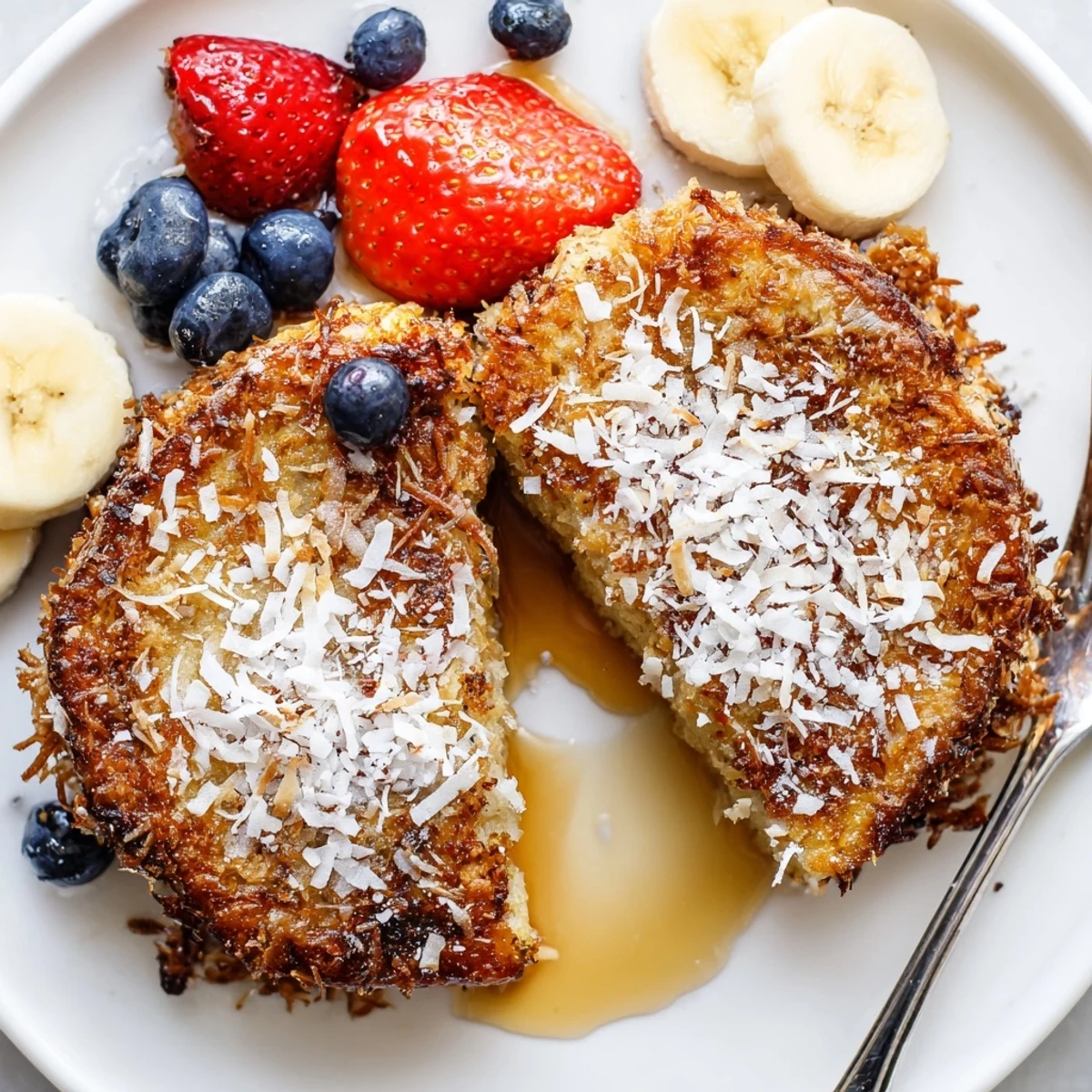 Save
Save The morning I served this at a brunch potluck, three people asked for the recipe before they even finished chewing their first bite.
What to Know About Making It Dairy Free
Swap the whole milk for full fat coconut milk and fry only in coconut oil, and you will lose nothing in flavor or texture. The result is actually even more coconut forward, which most people consider a bonus.
Choosing the Right Bread
Brioche and challah are ideal because their slightly sweet, tender crumb soaks up custard like a sponge while staying intact. If you only have regular white bread, try to find a thick cut bakery loaf and let it sit out uncovered overnight so the surface dries out a bit.
Keeping It Warm for a Crowd
If you are cooking for more than two people, preheat your oven to 100 degrees Celsius and slide finished slices onto a wire rack set inside a baking sheet as they come out of the pan. This keeps them warm and crisp without steaming the bottoms soft.
- A wire rack is better than a plate because air circulates underneath and prevents sogginess.
- Cover loosely with foil if they will sit more than 15 minutes, but avoid sealing it tightly.
- Always serve within 30 minutes for the best texture.
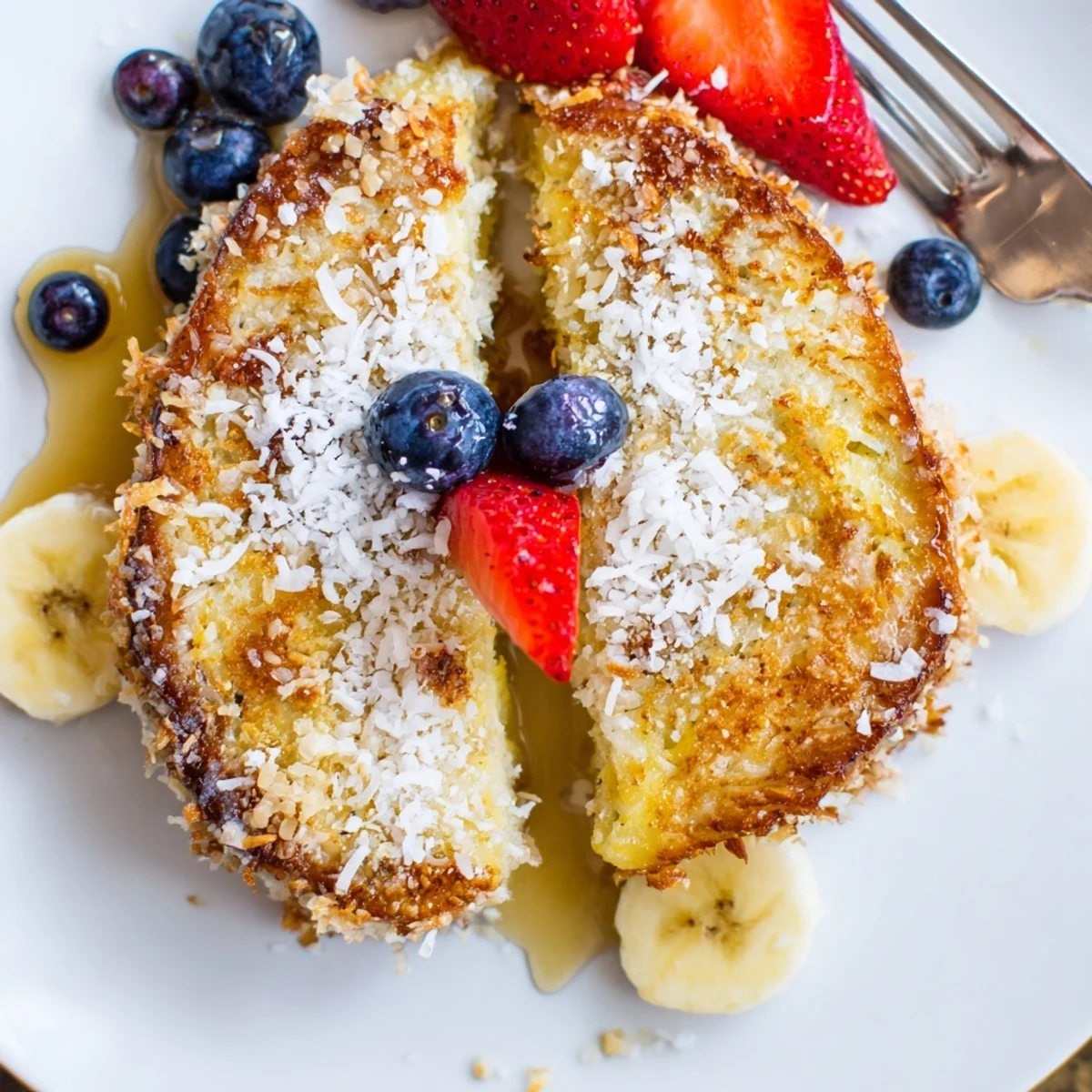 Save
Save This is the kind of breakfast that turns an ordinary weekend into a small celebration without any extra effort. Make it once and you will find yourself keeping shredded coconut stocked permanently.
Recipe Questions & Answers
- → What bread works best for the coating?
-
Brioche or challah give a rich, tender crumb that soaks custard without falling apart; any thick white bread also holds a crisp coconut crust well.
- → How do I avoid soggy slices?
-
Soak each slice briefly so it’s saturated but not dripping. Press firmly into the coconut mix to form a compact crust and fry over medium heat to set the exterior quickly.
- → Can I make this dairy-free?
-
Yes—use full-fat coconut milk in the custard and replace butter with additional coconut oil for frying to preserve richness and enhance the coconut flavor.
- → Should I add panko to the coconut?
-
Panko blends with shredded coconut for extra crunch and stability; use it sparingly if you prefer a purer coconut texture or omit for a lighter crust.
- → What pan and fats give the best result?
-
A non-stick or well-seasoned skillet heated to medium with a mix of butter and coconut oil yields golden color and fragrant coconut notes; adjust heat to avoid burning the coconut.
- → How should I serve the finished slices?
-
Serve hot for maximum crispness with maple syrup, sliced bananas or fresh berries and a light dusting of powdered sugar to balance texture and sweetness.