
 Save
Save This beloved Midwestern classic features a unique, spiced meat sauce simmered with warm Mediterranean flavors like cinnamon, allspice, and cocoa. Unlike traditional chili, the beef simmers raw in liquid for a signature texture, creating a rich, flavorful sauce perfect for ladling over spaghetti. The dish offers customizable serving styles from simple two-way to fully loaded five-way, letting everyone choose their ideal combination of toppings.
The first time I encountered Cincinnati chili, I was completely baffled by the concept of putting meat sauce over spaghetti and calling it chili. Then I actually tasted it at a little hole-in-the-wall diner during a road trip through Ohio, and something clicked. The combination of warm cinnamon, cocoa, and savory beef felt like discovering a secret language of flavors I never knew existed. Now it is one of those comfort foods that appears on my dinner table whenever the weather turns cold and I need something that feels like a hug.
Last winter I made a massive batch for my book club, and there was this moment of silence when everyone took their first bite followed immediately by everyone asking for the recipe. One friend who swore she hated anything with cinnamon in savory food went back for thirds. Watching people discover something completely new and fall in love with it is exactly why I love sharing recipes like this.
Ingredients
- Ground beef: The 80/20 ratio gives you the right balance of flavor and tenderness, plus the fat helps carry all those spices beautifully through the sauce
- Cheddar cheese: Finely shredded is crucial here because it melts instantly into the warm chili and creates those perfect gooey strands we all love
- Yellow onion: Finely chopped so it practically disappears into the sauce while lending that essential savory foundation
- Garlic: Fresh minced garlic adds that aromatic background note that makes everything taste more complete
- Kidney beans: These are optional but they add such a nice texture contrast and make the dish even more satisfying
- Tomato sauce: Use plain sauce, not pasta sauce, since you want to build your own flavor profile
- Water: This might seem like a lot but the long simmer time reduces everything down into that signature consistency
- Tomato paste: Concentrated tomato goodness that deepens the color and adds body to the sauce
- Chili powder: The backbone of the spice blend, providing that familiar warmth without overwhelming heat
- Ground cinnamon: The secret ingredient that makes Cincinnati chili taste like Cincinnati chili
- Unsweetened cocoa powder: Adds a subtle earthiness that balances the tomato and enhances the beef flavor
- Ground allspice: Contributes that slight warmth and complexity that keeps people guessing
- Ground cumin: Brings a nutty, savory element that bridges the gap between chili and spiced meat sauce
- Ground cloves: Just a pinch adds this incredible depth that you notice when it is missing
- Cayenne pepper: Optional if you want a little kick, but the chili gets most of its character from the other spices
- Bay leaf: Classic simmering aromatics that quietly work their magic in the background
- Worcestershire sauce: Provides that umami punch and subtle tang that rounds out all the spices
- Salt and black pepper: Essential seasoning that brings everything together and lets the spices shine
- Apple cider vinegar: Just enough acid to cut through the richness and brighten all the flavors
- Brown sugar: Balances the acidity from the tomatoes and vinegar while adding a hint of caramel sweetness
- Spaghetti: Thin spaghetti works best because the sauce can really cling to every strand
Instructions
- Create the base:
- Combine your ground beef and water in a large stockpot, using a wooden spoon to break up the meat completely until it resembles a loose, watery mixture. This unusual technique of not browning the meat is what gives Cincinnati chili its unique texture and lets the spices penetrate every bite.
- Add the aromatics:
- Stir in the chopped onion, garlic, tomato sauce, tomato paste, Worcestershire sauce, vinegar, brown sugar, and all your spices. Mix everything thoroughly so the spices are evenly distributed and nothing is clumping together at the bottom.
- Simmer low and slow:
- Bring the pot to a gentle boil over medium-high heat, then immediately reduce to low and let it simmer uncovered for an hour and a half. Stir occasionally and skim any excess fat that rises to the surface as the sauce develops its deep, rich flavor.
- Season and finish:
- Taste your chili and adjust the salt or spice levels if needed, then remove and discard the bay leaf. The sauce should be thick, fragrant, and a beautiful deep reddish-brown color.
- Prepare the pasta:
- While the chili simmers, cook your spaghetti according to the package directions until al dente. Drain well and keep it warm until you are ready to assemble the bowls.
- Build your bowl:
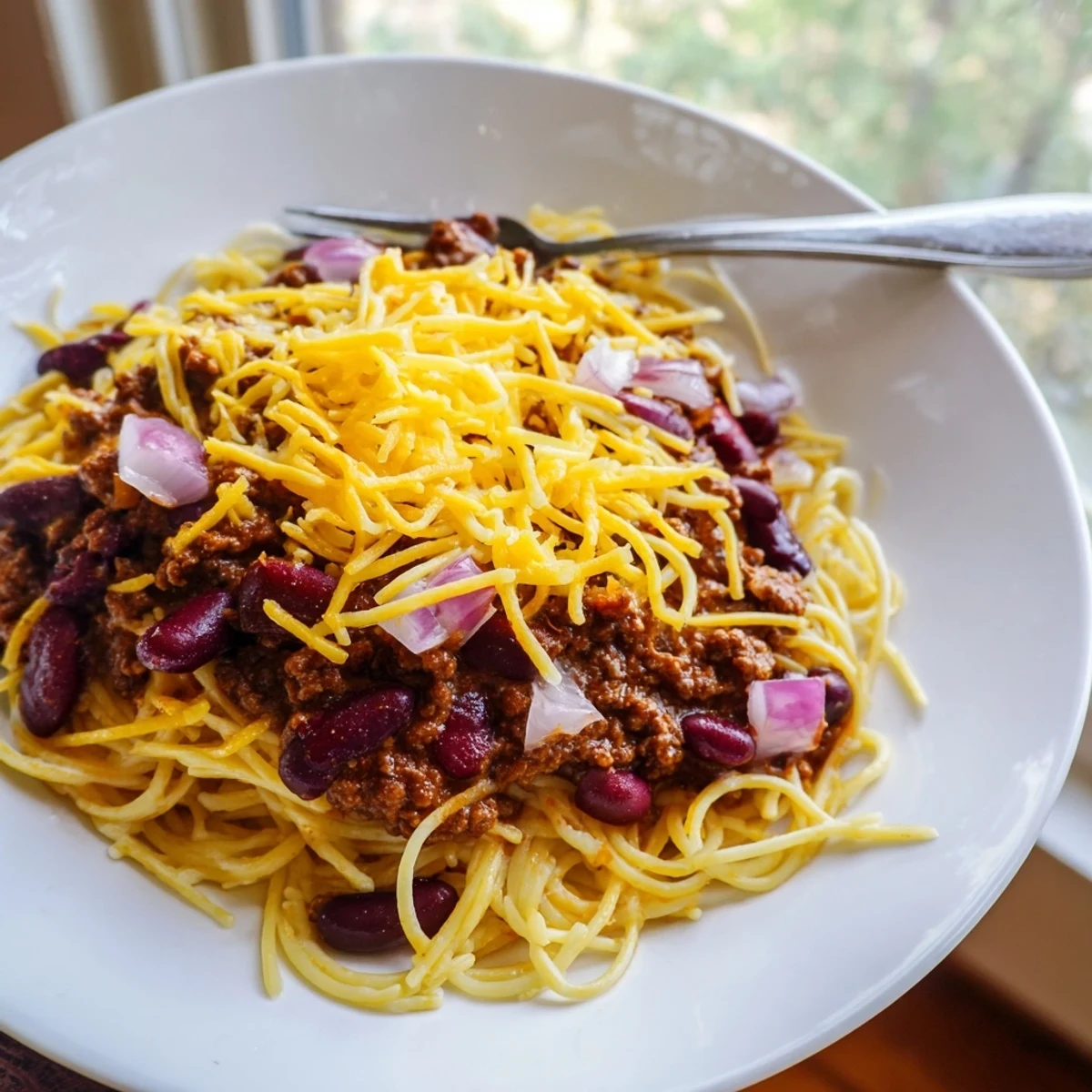
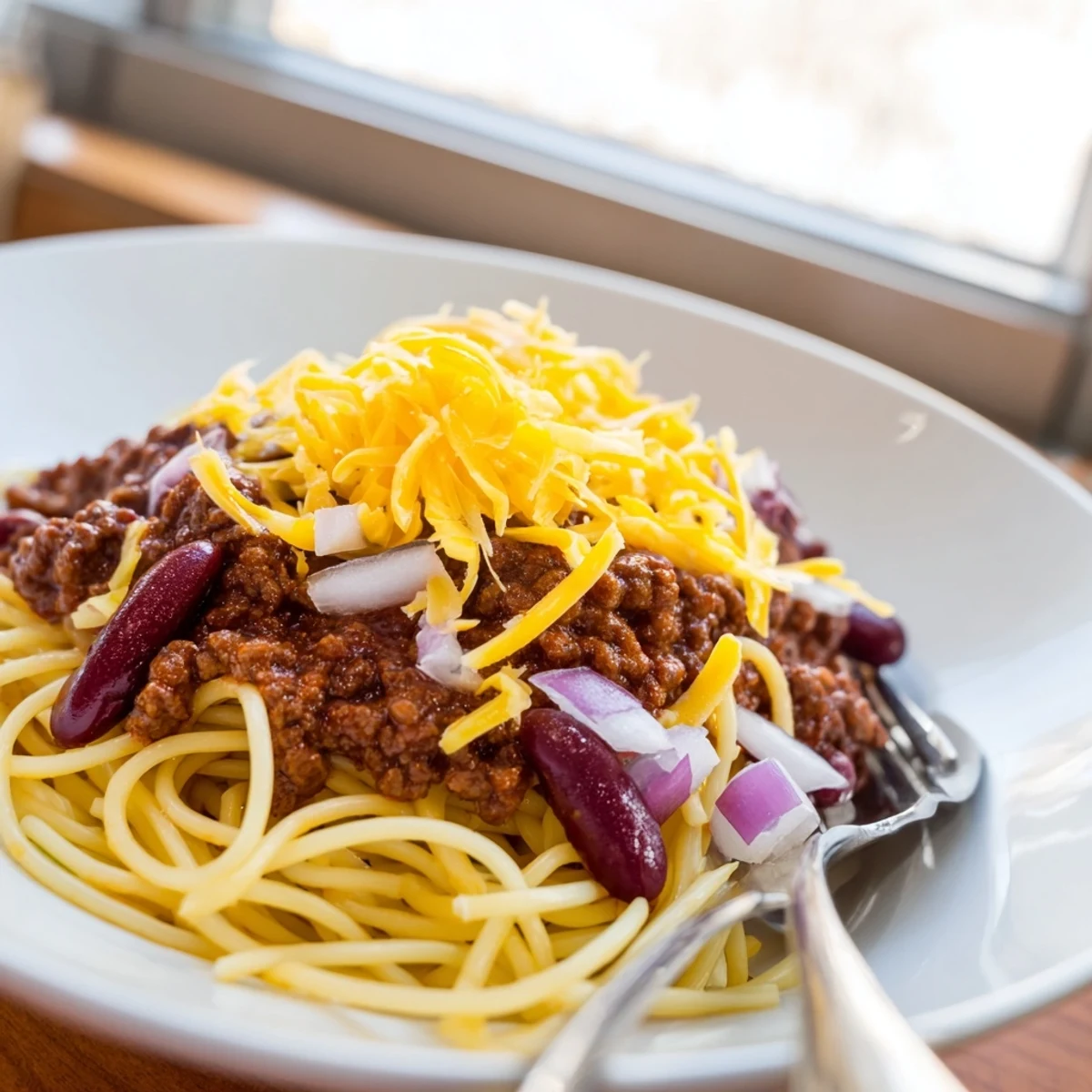
- Start with a bed of spaghetti, ladle the chili generously over the top, then add your chosen toppings. Two-way is just spaghetti and chili, three-way adds cheese, four-way includes onions or beans, and five-way has it all with both onions and beans.
 Save
Save There was this snowed-in Sunday when I made a triple batch and ended up eating it for breakfast, lunch, and dinner for two days straight. Something about the warm spices and comforting texture just hits different when you are watching snow pile up outside. Now whenever I smell cinnamon and cocoa simmering on the stove, I am instantly transported back to that cozy weekend.
Getting The Consistency Right
The key is patience during that long simmer, and resisting the urge to crank up the heat to speed things along. I have learned that keeping the temperature low and steady gives the spices time to really bloom and marry together. The sauce should reduce by about a third and thicken naturally without any help from flour or cornstarch.
The Toppings Make It Special
While the chili itself is delicious, the toppings are what transform it into a complete experience. I like to set up a little toppings bar and let everyone build their own perfect version. Seeing friends debate between four-way and five-way while loading their bowls with extra cheese has become part of the fun.
Make It Your Own
Once you have the basic technique down, do not be afraid to adjust the spice blend to suit your taste. Some days I add extra cinnamon for a sweeter profile, other times I bump up the cayenne when I want more heat. The recipe is forgiving and welcomes your personal touch.
- Try ground turkey instead of beef for a lighter version that still captures all those warm spices
- A splash of coffee in place of some water adds incredible depth if you want to get fancy
- The chili freezes beautifully, so make a double batch and save half for those nights when cooking feels impossible
 Save
Save There is something wonderfully comforting about a dish that breaks all the rules and somehow creates something magical in the process. I hope this recipe becomes as beloved in your kitchen as it has in mine.
Recipe Questions & Answers
- → What makes Cincinnati chili different from traditional chili?
-
Cincinnati chili simmers ground beef raw in liquid rather than browning it first, creating a finer, sauce-like consistency. The seasoning includes warm Mediterranean spices like cinnamon, allspice, and cocoa, giving it a unique flavor profile unlike Southwestern-style chili.
- → What does two-way, three-way, four-way, and five-way mean?
-
These terms refer to how many toppings are added. Two-way is spaghetti topped with chili sauce. Three-way adds cheddar cheese. Four-way includes either diced onions or kidney beans. Five-way features both onions and beans with cheese for the fully loaded experience.
- → Why shouldn't I brown the beef before simmering?
-
Simmering the raw ground beef in liquid creates the characteristic fine texture of Cincinnati chili. Browning would produce larger crumbles and alter the traditional mouth. The long simmer time ensures the meat cooks through while developing the signature smooth consistency.
- → Can I make Cincinnati chili ahead of time?
-
Absolutely. The flavors actually deepen and improve after resting in the refrigerator for a day or two. Store the cooled sauce in an airtight container for up to four days. Reheat gently on the stove, adding a splash of water if needed to restore consistency.
- → What can I substitute for the kidney beans?
-
If you prefer not to use kidney beans, you can substitute with black beans, pinto beans, or simply omit them entirely for a bean-free version. Some people also enjoy adding diced bell peppers or jalapeños for extra texture and flavor.