
 Save
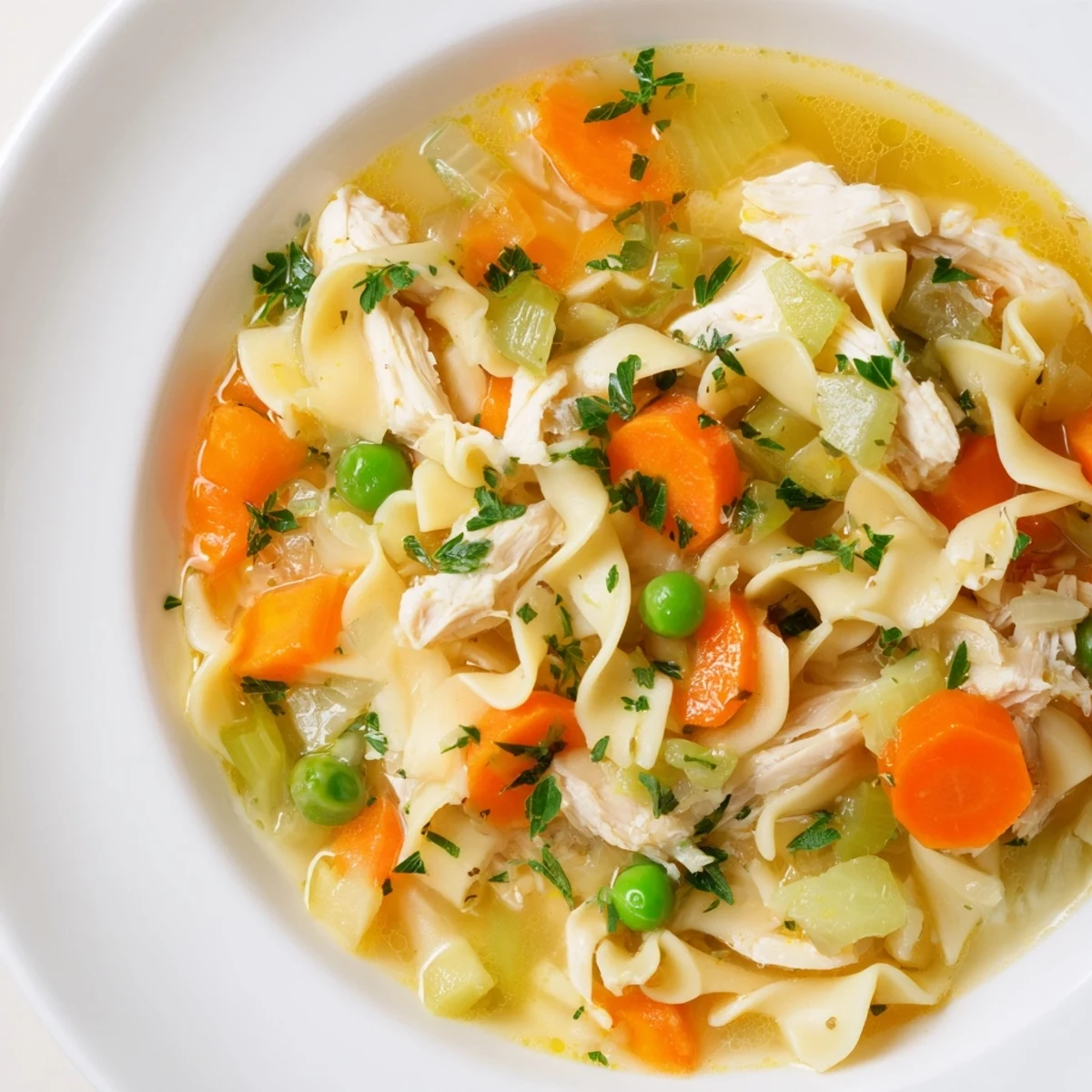
Save This comforting dish combines tender chicken with sliced carrots, celery, onions, and peas in a rich, flavorful broth. Egg noodles simmer until tender, creating a hearty meal perfect for chilly days or when seeking soothing warmth. Fresh herbs bring added depth, while simple seasonings enhance the wholesome blend. Easy to prepare and naturally nourishing, this comforting option suits a wholesome and satisfying feeding experience.
There's something about the smell of chicken simmering with carrots and celery that instantly transports me to my grandmother's kitchen on a gray winter afternoon. She never measured anything—just threw vegetables into a pot with practiced ease while I sat at the counter doing homework. Years later, I realized I was trying to recreate that exact moment of comfort, and this recipe is as close as I've gotten to capturing it.
I made this for my roommate on the day she got sick, and she kept saying it tasted like someone actually cared. That stuck with me. There's no fancy technique here, just good ingredients treated gently, and somehow that simplicity is exactly what people need when they're not feeling like themselves.
Ingredients
- Chicken breasts: Boneless and skinless cook faster and stay tender if you don't let them go past opaque; they'll keep cooking in the broth even after you remove the heat.
- Carrots and celery: The holy pair that gives soup its soul—don't skip them or rush their cooking, because they need those first few minutes to release their sweetness.
- Onion: This is where the depth comes from; let it soften completely before adding anything else.
- Garlic: Just one minute in the hot oil is enough; any longer and it turns bitter and you'll have to start over.
- Frozen peas: They go in at the very end so they stay bright and don't turn to mush.
- Chicken broth: Low-sodium matters here because you control the salt, not the box.
- Egg noodles: They swell as they cook, so don't leave the pot unattended or you'll have mush instead of soup.
- Bay leaf and thyme: These two do the heavy lifting for flavor; the bay leaf comes out before serving or it becomes a hazard.
- Fresh parsley: Stir it in at the very end so it stays green and alive instead of turning gray.
- Olive oil: Just enough to coat the bottom of the pot and get everything moving without making it greasy.
Instructions
- Start with the base:
- Heat olive oil in your pot over medium heat until it shimmers slightly. Add the onion, carrots, and celery, and let them soften for 4 to 5 minutes, stirring now and then so nothing sticks.
- Wake up the garlic:
- When the vegetables are soft enough to push with a spoon, add the minced garlic and cook for exactly one minute. You'll smell it change—that's when you know it's done.
- Sear the chicken:
- Push everything to the side and add the diced chicken to the empty space. Let it sit for a minute before stirring, then cook for 3 to 4 minutes until it's no longer pink on the outside, though the inside might still be a little raw—that's fine, it'll finish in the broth.
- Build the broth:
- Pour in the chicken broth carefully, add the bay leaf and thyme, and turn the heat up until you see big bubbles breaking the surface. Then reduce the heat to a gentle simmer, cover the pot, and let it cook undisturbed for 15 minutes.
- Add the noodles and peas:
- Remove the cover, stir in the egg noodles and frozen peas, and simmer uncovered for 8 to 10 minutes. The noodles will tell you when they're done by their texture, not by the clock.
- Finish with flavor:
- Fish out the bay leaf with a spoon, stir in the fresh parsley, and taste the broth. Add salt and pepper until it tastes like something you'd want to drink.
 Save
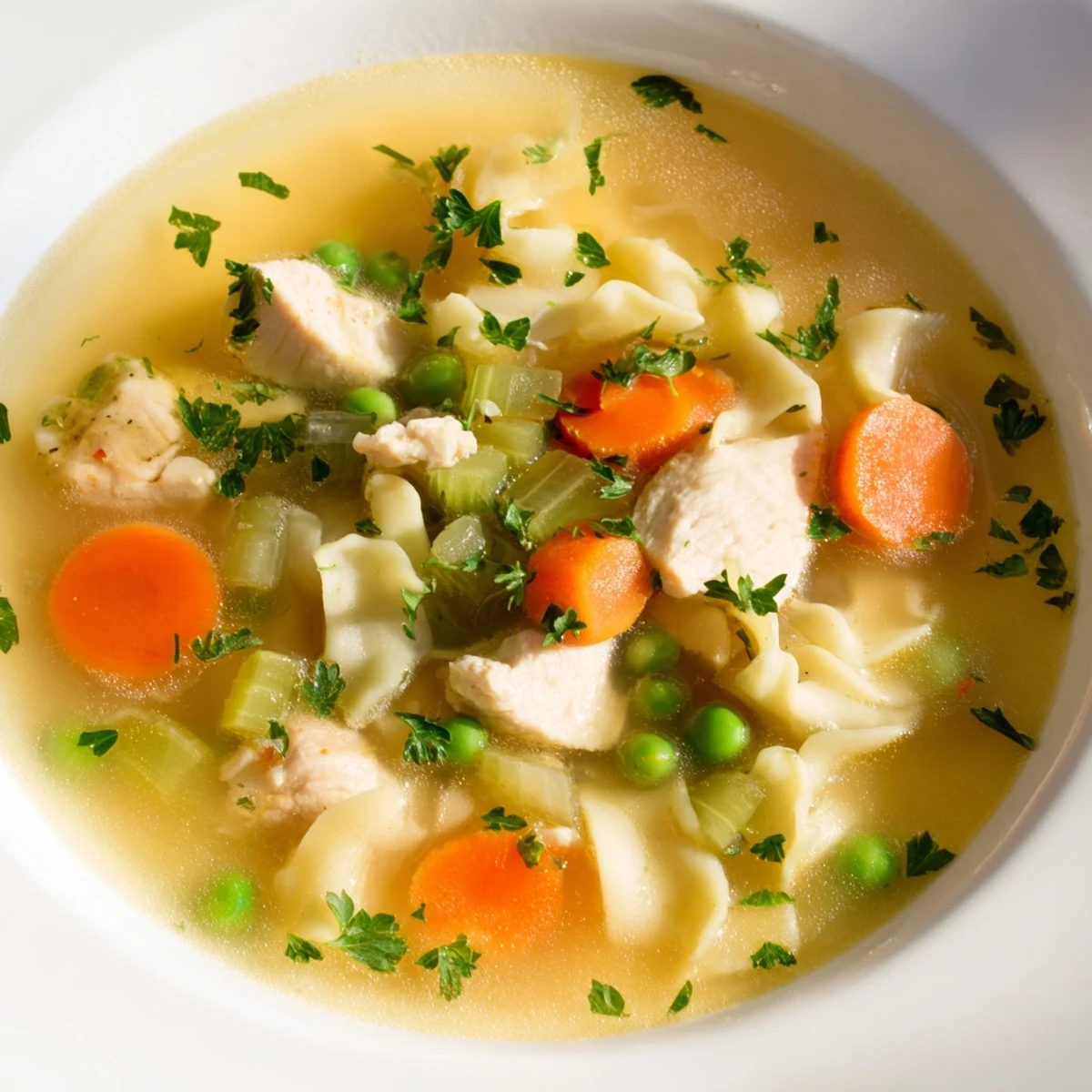
Save There was a night when I made this soup for friends who'd had a terrible week, and we sat around the table in near silence, just eating and feeling the warmth move through us. Nobody talked about the bad things for the first time in days. That's when I understood that this soup does something beyond nutrition—it creates a little pocket of peace.
Why This Soup Works Every Time
The beauty of this recipe is that it doesn't rely on any tricks or tricky timing. The slow simmer of the broth draws flavor out of the bones and vegetables naturally, and the chicken stays moist because it's cooking in liquid instead of heat. There's a real simplicity to cooking things in broth rather than trying to make them perfect in a pan first.
Making It Your Own
I've learned that this soup is a canvas. On nights when I had kale instead of peas, I threw it in five minutes before serving. A friend added a splash of lemon juice and swore it changed everything. Another person I know tosses in egg or rice at the end to make it thicker. The broth is strong enough to welcome changes without falling apart.
Small Things That Make a Difference
The smallest details matter most in a soup this simple. Don't rush the initial sauté of vegetables, because that's where the foundation gets built. Taste the broth before you decide on salt, because store-bought broth varies wildly in saltiness. A good soup sits in your mouth for a moment and makes you feel noticed.
- Keep the frozen peas frozen until the last minute so they stay bright and don't turn the broth cloudy.
- If you have homemade broth, use it without hesitation; it will make this soup taste like love.
- Serve it in bowls that have been warmed, because a cold bowl cools down soup faster than you'd think.
 Save
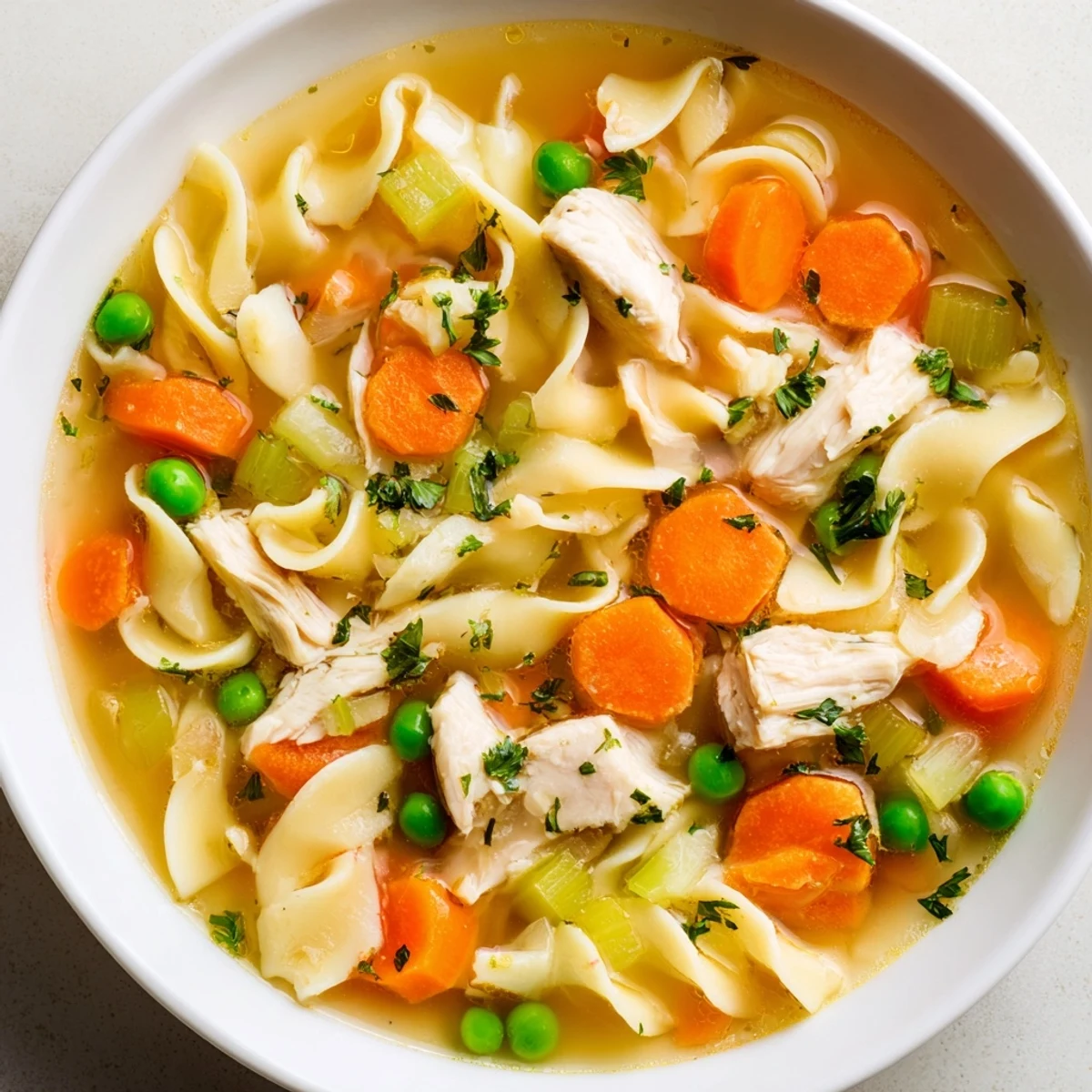
Save This soup has been my answer to a hundred different situations, and it's never let me down. Make it, share it, and watch what happens.
Recipe Questions & Answers
- → What type of noodles are best for this dish?
-
Egg noodles add a tender, slightly chewy texture that pairs well with the savory broth and chicken. Gluten-free pasta can substitute if needed.
- → Can I use bone-in chicken for more flavor?
-
Yes, bone-in chicken pieces can be used during cooking to enhance richness. Remove bones before serving for ease of eating.
- → How should I adjust cooking times when adding vegetables?
-
Root vegetables like carrots and celery are sautéed early to soften, while peas are added later to maintain a bright texture.
- → What herbs complement this broth the best?
-
Fresh parsley and dried thyme work beautifully to add subtle herbaceous notes without overpowering the natural flavors.
- → Is it possible to make a dairy-free version?
-
Absolutely. This dish is naturally dairy-free and relies on broth and vegetables for its rich, comforting taste.