
 Save
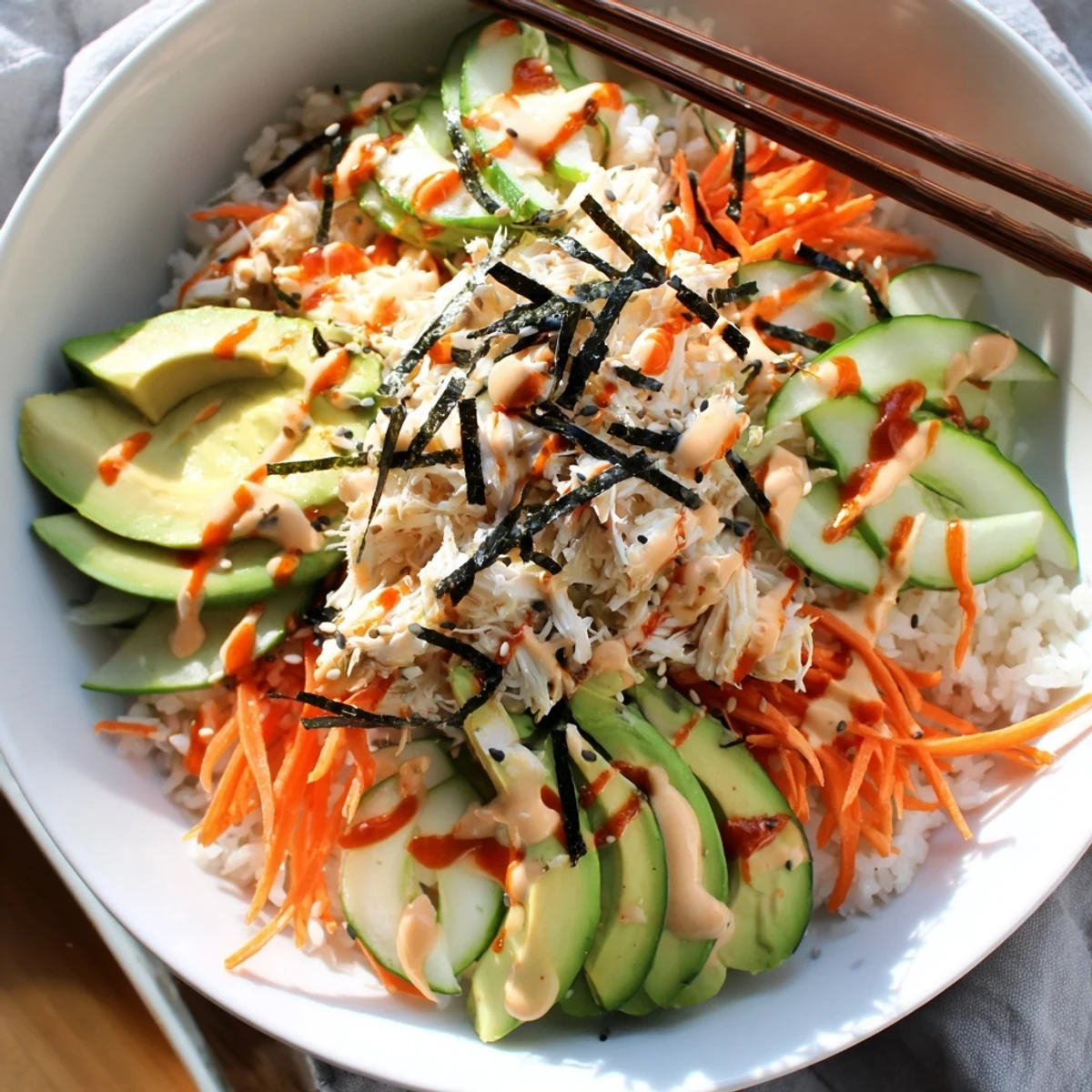
Save Layer seasoned sushi rice with shredded surimi, sliced avocado, cucumber ribbons and nori for a vibrant bowl that echoes a California roll. Finish with a drizzle of Kewpie mayo spiked with sriracha, toasted sesame seeds, pickled ginger and soy on the side. Ready in about 40 minutes, it's an easy weeknight option adaptable with real crab, shrimp or tofu.
My apartment kitchen barely had counter space, but one rainy Tuesday I decided sushi night was happening regardless of logic. Bowls felt like the honest answer: all the satisfaction of a California roll without the wrestling match of nori and bamboo mats. The rice steamed on the back burner while I julienned cucumber so thin you could almost see through it, and something about that rhythm made the whole evening feel like a small victory.
I set four bowls on the counter for friends who had never eaten anything beyond takeout sushi, and they stood there assembling their own combinations like kids at an ice cream topping bar.
Ingredients
- Sushi rice (1 and a half cups): The foundation of the entire bowl, so do not skip rinsing it until the water runs clear or you will end up with gummy texture.
- Water (2 cups): Measured precisely for the absorption method, which gives you that tender but distinct grain.
- Rice vinegar (3 tablespoons): This is what transforms plain rice into sushi rice, lending that subtle tang.
- Sugar (1 tablespoon): Balances the acidity of the vinegar and rounds out the seasoning.
- Salt (1 teaspoon): A small amount that wakes up every other flavor in the bowl.
- Imitation crab sticks (200 g, shredded or roughly chopped): Budget friendly and nostalgic, though real crab works beautifully if you are feeling generous.
- Avocado (1 large, sliced): Let it ripen until it yields slightly to pressure, firmer is better here so slices hold their shape.
- Cucumber (1 medium, thinly sliced or julienned): Adds crunch and freshness that cuts through the richness.
- Nori sheets (2, cut into thin strips or small squares): That briny pop of ocean flavor makes the whole dish taste legitimate.
- Toast sesame seeds (2 tablespoons): Toast them in a dry pan for thirty seconds and watch the aroma fill your kitchen.
- Mayonnaise, preferably Kewpie (4 tablespoons): The richer egg yolk content in Kewpie makes a noticeable difference in creaminess.
- Sriracha (1 tablespoon, optional): Fold it into the mayo for a spicy kick that balances the cool avocado.
- Carrot (1 small, julienned, optional): A splash of color and a slight sweetness that ties everything together.
- Pickled ginger (for serving): Palate cleanser between bites and a bright contrast to the rich rice.
- Soy sauce (for serving): Keep it on the side so everyone controls their own salt level.
Instructions
- Wash and cook the rice:
- Rinse the sushi rice under cold running water, swishing with your hand, until the water turns from milky to mostly clear. Combine with two cups of water in a saucepan, bring it to a boil, then drop the heat to low, cover tightly, and let it cook undisturbed for fifteen minutes before removing from heat and resting covered for another ten.
- Season the rice:
- Stir rice vinegar, sugar, and salt together in a small bowl until fully dissolved, then drizzle it over the warm rice while gently folding with a paddle or wooden spoon. Let the rice cool to room temperature so the grains firm up and the seasoning settles in.
- Whisk the spicy mayo:
- Combine mayonnaise and sriracha in a small bowl, tasting as you go until the heat level feels right for you. This takes about thirty seconds and keeps in the fridge for a week if you make extra.
- Build each bowl:
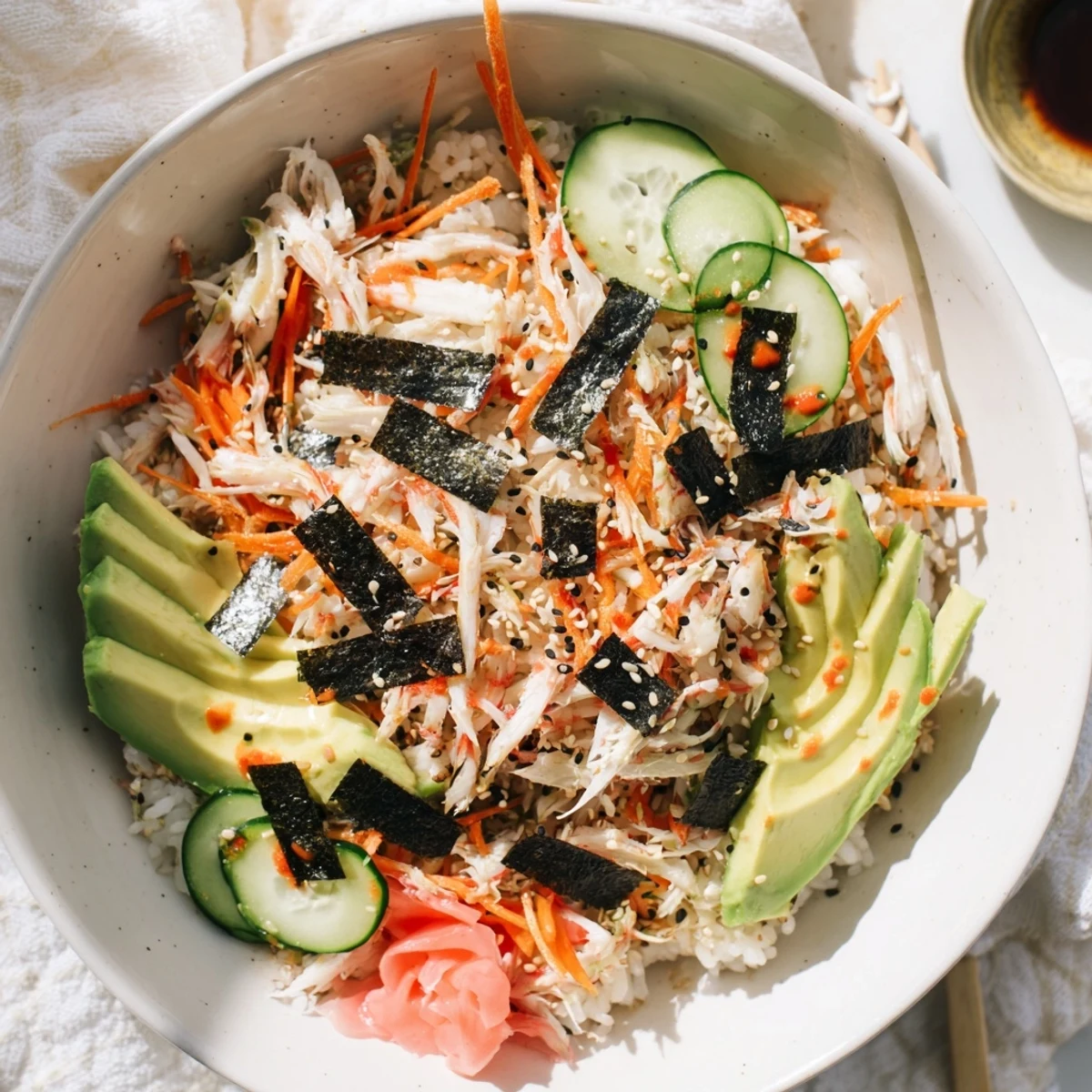
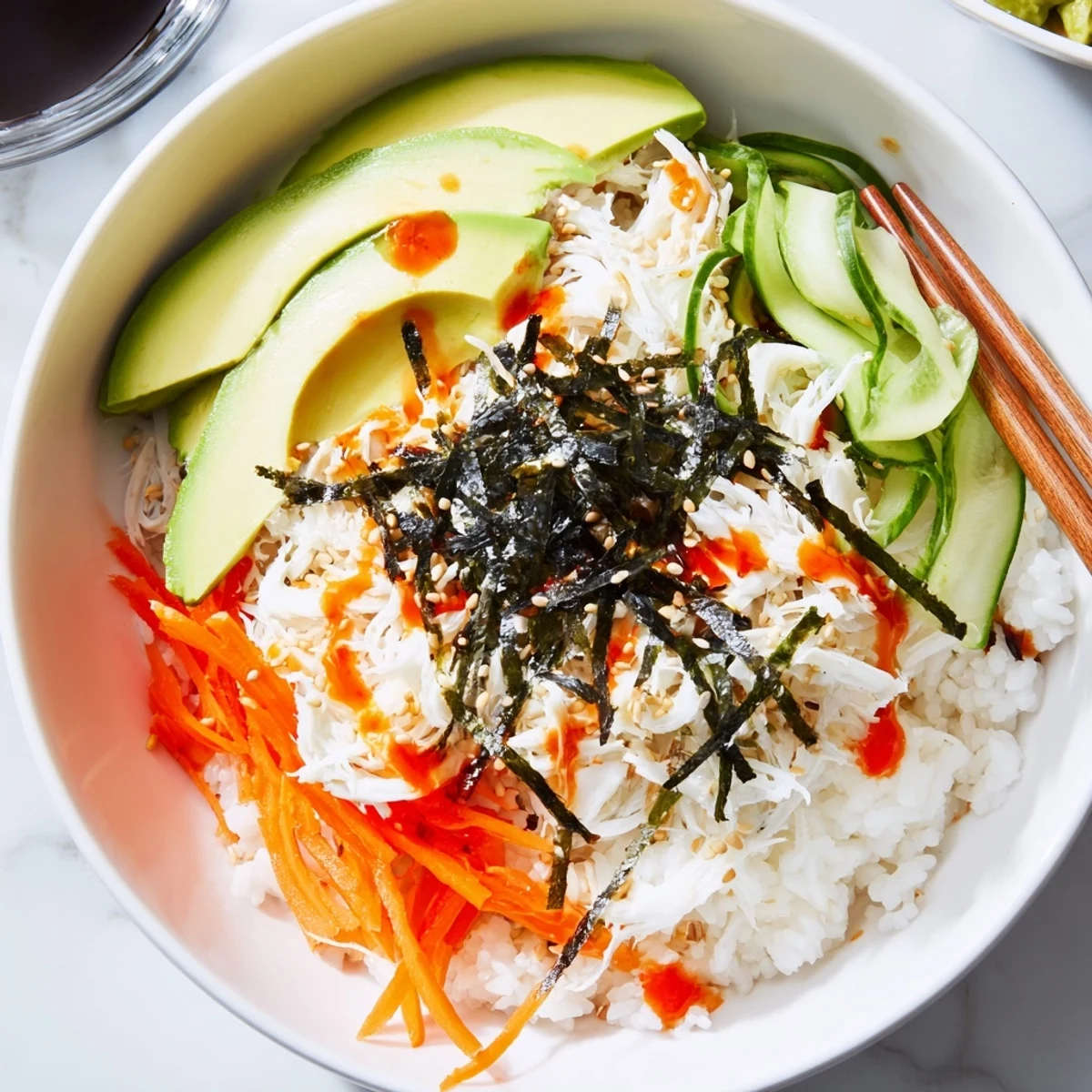
- Spoon a generous bed of seasoned rice into each serving bowl, then arrange imitation crab, avocado slices, cucumber, julienned carrot, and nori strips on top in whatever pattern pleases you. Think of it as a canvas rather than a formula.
- Finish and serve:
- Drizzle spicy mayo across the top, scatter toasted sesame seeds generously, and set out pickled ginger and soy sauce so everyone can adjust to their taste. Serve immediately while the rice is still slightly warm and the avocado is bright green.
 Save
Save That night turned into a standing weekly tradition, four friends around a small table covered in mismatched bowls and soy sauce spills, talking long after the rice went cold.
Swaps and Variations
Cooked shrimp or pan seared tofu both step in beautifully for the imitation crab if you want to change direction entirely.
Serving Ideas
A chilled glass of sake or a crisp dry white wine turns this simple bowl into something that feels deliberately planned rather than thrown together. Add edamame or sliced radishes on the side if you want a few more textures on the table.
Making It Your Own
Once you understand the basic structure, you will start freestyling based on what needs using up in your refrigerator. This recipe is more of a framework than a rulebook, which is exactly what weeknight cooking should feel like.
- Use gluten free soy sauce and verify your surimi packaging to make the entire bowl gluten free.
- Press extra firm tofu and sear it in sesame oil for a plant based version that still satisfies.
- Remember that the bowl tastes best eaten fresh, so only assemble what you plan to finish.
 Save
Save Keep it simple, trust your taste, and know that every bowl you make will be a little different and a little better than the last one.
Recipe Questions & Answers
- → How do I cook sushi rice for the bowl?
-
Rinse the rice until water runs clear, use about 1½ cups rice to 2 cups water, simmer covered 15 minutes, then rest 10 minutes. Fold in warmed rice vinegar mixed with sugar and salt while the rice is still warm for glossy, seasoned grains.
- → What can I use instead of imitation crab?
-
Swap surimi for cooked lump crab, sliced cooked shrimp, or firm tofu. Use lightly dressed real crab for a richer taste, or marinated tofu for a vegetarian-leaning bowl.
- → How do I make the spicy mayo?
-
Whisk a neutral mayonnaise like Kewpie with sriracha to taste—start with a 4:1 mayo to sriracha ratio and adjust. For extra tang, add a squeeze of lemon or rice vinegar.
- → How can I keep avocado from browning?
-
Slice avocado just before serving and toss gently with a little lemon or rice vinegar if not serving immediately. Storing halves with pit and wrapped tightly helps slow oxidation for short periods.
- → How do I make this bowl gluten-free?
-
Use tamari or a certified gluten-free soy sauce and check the surimi label for wheat. Many imitation crab and condiments contain gluten, so swapping to clearly labeled gluten-free options ensures safety.
- → What’s the best way to store leftovers?
-
Keep components separate: store rice airtight and toppings chilled. Reheat rice gently with a splash of water, then assemble just before eating to preserve texture, especially for avocado and nori.